 Home Advisor Locksmith
Locksmith services for gyms, studios and fitness centers
Fitness spaces mix open floors, shared lockers, wet areas and staff only rooms. Good lock planning keeps members comfortable, protects belongings and makes opening and closing routines simple for the team.
What makes a fitness space different
A gym is a place where strangers share a room, leave their belongings in lockers and move between zones during a single visit. The entry area, the training floor, the locker rooms, the studio rooms, the office and the equipment storage all have different security needs. A single lock policy cannot cover them. Planning by zone is what keeps things manageable.
Humidity is the second big difference. Showers, steam rooms, pools and heavy sweating raise moisture levels, and Miami Dade adds its own warm, damp climate and salt air near the coast. Hardware in those spaces faces more corrosion and wear than it would in a dry office. Choosing materials and finishes that handle moisture is a practical necessity, not a luxury.
Finally, fitness businesses run long hours with small teams. Opening and closing procedures need to be simple enough that a tired employee on the last shift does them correctly every time. Hardware that is confusing, unreliable or dependent on a single key holder invites mistakes. A locksmith can help you design a setup that fits the way your business actually runs.
The front entrance and member access
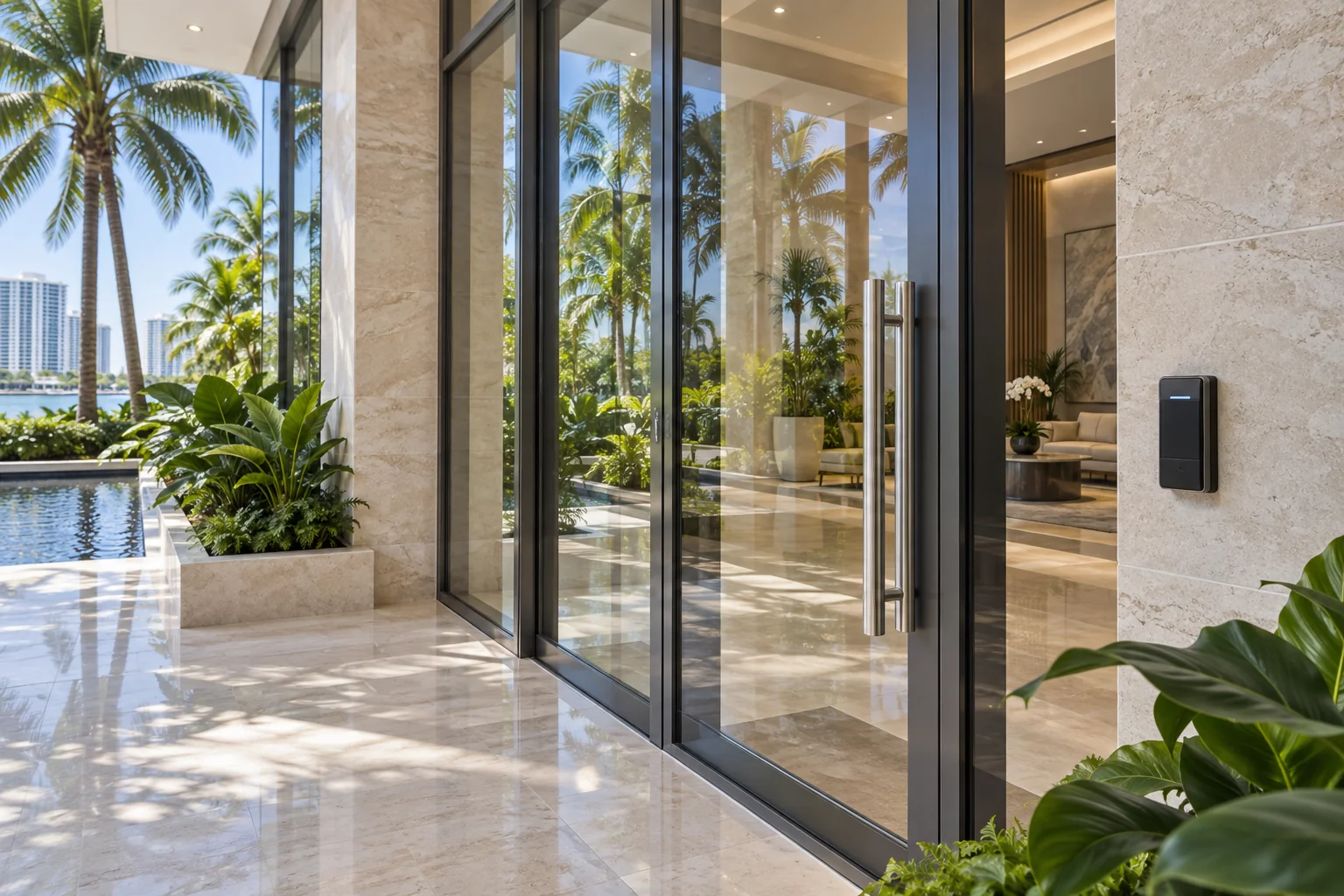
The main door sets the tone. Members come and go at all hours in some facilities, and at set hours in others. Staffed gyms often use a front desk and a manually locked door. Other facilities offer after hours access with cards, fobs or keypad codes so members can enter without staff present. Each arrangement needs hardware that suits it.
Electronic systems let you give each member their own credential and turn it off when a membership ends. They also create a record of when doors were used, which can be helpful if there is a question about who was in the building. Our comparison of key card vs key fob vs keypad explains the tradeoffs, and our page on access control and keypad locks describes how such systems are installed.
Think about what happens when power or network service goes out. A good access system has a clear plan for batteries, backup power and a mechanical override. It also has a safe way to let people leave at all times. Exit rules vary, so ask your building department or fire marshal what applies to your doors, and share the answers with the technician before choosing hardware.
- Decide whether members enter with staff present, after hours, or both.
- Choose credentials that can be turned off when a membership ends.
- Plan for power loss with batteries and a mechanical override.
- Confirm exit requirements with your local authorities before choosing hardware.
Lockers: the heart of the member experience
Lockers are where members decide whether they trust your facility. A locker that sticks, rattles, rusts or fails to lock is an easy way to lose that trust. Locker hardware comes in several styles. Some lockers use members' own padlocks, some have built in combination dials, some use keys, and some use electronic keypads or wristbands tied to the membership system.
Each style has pros and cons. Padlock lockers are simple and easy to maintain, but they depend on members bringing padlocks and leave you with cut locks to deal with when someone forgets a combination. Built in keyed locks keep control with the facility but require a key system and careful tracking. Electronic locks are convenient and assign a locker for a visit, but they need power and occasional servicing.
A locksmith can help with all of these. For padlock lockers, our page on padlock types compared explains which styles hold up in damp rooms, and many facilities find that a rust resistant body is worth choosing. For built in locks, technicians can rekey, replace cylinders and repair latch mechanisms in place, which often costs less than replacing a bank of lockers.
Dealing with forgotten combinations and lost keys
Every gym with lockers faces the same recurring problem: a member leaves their things inside a locked locker and cannot open it. Staff need a clear procedure. Typically this includes confirming the member's identity, recording the locker number, opening the locker with the facility's method, and noting the event in a log. A written step by step policy protects both the member and the business.
For padlock lockers, the padlock is the member's property, and removing it should follow a clear rule. Many facilities announce an overnight clear out policy and a place where cut locks are replaced. For facility owned locks, a master key held by a small number of staff can open lockers, and this master key should itself be controlled. Our page on master key systems explains how these keys are organized.
A locksmith can be called for lockers that will not open for mechanical reasons, such as a bent latch, a jammed cam or a corroded cylinder. Tell the technician the locker brand, lock type and how many are affected. They can often service a bank of lockers in a single visit, and the price is explained before work starts.
Prevention beats rescue. Post a clear sign near the lockers explaining your overnight policy, how members can reclaim items, and who to ask for help. Keep a small supply of replacement keys or padlocks at the front desk. Train staff to note repeat problem lockers, since a locker that fails twice often has a worn latch or a bent door that needs attention. A short monthly walk along the locker bank, opening and closing each door, finds most faults before members do.
Locker rooms, showers and wet areas
Locker rooms deserve special attention. They combine privacy needs, safety needs and heavy moisture. Doors to private changing rooms and shower stalls often use privacy latches that lock from inside but can be opened from outside in an emergency. Such hardware should be chosen so staff can respond if someone needs help.
Moisture is relentless. Stainless steel or well coated hardware lasts longer in wet areas than plain steel, and our comparison of brass vs stainless lock hardware explains the choices. Even good finishes need care. Wipe down hardware during regular cleaning, avoid harsh chemicals that eat finishes, and report any rust or stiffness early.
Ventilation also matters. A locker room with poor airflow holds moisture and accelerates corrosion on every metal surface. While a locksmith cannot fix airflow, they can tell you when the condition of the hardware suggests a ventilation problem. Our guide on salt air and lock corrosion explains the processes that damage metal in this climate.
Studio rooms, storage and equipment
Fitness studios often have rooms for classes, cycling, yoga, boxing or dance, each with its own door. Some are open to members, some to instructors only, and some are locked between sessions. Door hardware in these rooms must be easy to use, quiet and safe. A door that slams during a meditation class is a problem, and a door that jams while people hurry to leave is a bigger one.
Equipment storage rooms hold items that can be valuable or hazardous, such as sound systems, mats, weights, cleaning supplies and spare parts. A lock with a controlled key keeps these rooms safe. For rooms used by several instructors, keypad locks can be convenient because codes can be changed without handing out keys. See our page on smart deadbolt setup and troubleshooting if you are considering electronic options.
Rolling doors, glass walls and sliding panels are common in modern studios, and they bring their own hardware. A technician can look at the doors and recommend suitable locks, from patch fittings on glass to track locks on sliding panels. Describe the door type and any existing hardware when you call.
Sound and comfort are part of the choice. Studio doors that clunk loudly or squeal on dry hinges distract a class and annoy neighbors in shared buildings. Soft closing hardware and well adjusted closers make a noticeable difference, and a technician can tune them during a visit. Where a studio shares a wall with another tenant, a quiet latch is a small courtesy that avoids complaints and keeps a good relationship with the building manager.
Staff areas, offices and cash handling
The back office is the business center of any gym. It may hold membership records, payment equipment, a computer, a safe and keys. This room deserves a better lock than the average interior door, and its key should be held by few people. A solid door, a strong frame and a good deadbolt are a sound starting point.
If you handle cash or checks, a safe is a good idea. Our page on safe combination reset and repair explains what service for a safe involves, and our page on cabinet and filing lock service covers desks and file cabinets. Keep cash drops regular, since a safe is a tool for short holding, not long storage.
Staff turnover is a constant in fitness, and part time schedules mean many hands touch the same keys. Trainers, front desk staff, cleaners and instructors come and go. Decide how keys and codes are issued and how they are collected at departure. If a key is not returned, rekeying the affected locks is usually a better answer than hoping the key turns up. Our guide to a business key control policy offers a framework to adapt.
Back doors, deliveries and after hours safety
Rear doors are a common weak point. They serve deliveries, trash removal and staff breaks, and they are often propped open for convenience. A door that is propped open is an unlocked door, no matter what hardware is installed. Alarms for doors that are held open too long can help, and a clear habit of closing the door after each use helps more.
Good hardware for a back door includes a sturdy deadbolt or a commercial lock, a strike plate secured into solid framing, and a closer so the door shuts by itself. The door must still open freely from inside for safe exit. Read about door closer and panic bar service to understand how exit hardware works.
Lighting and visibility matter outside. A well lit entrance and a clear view of the door from the parking area make it less appealing for trouble. A locksmith can speak to hardware, and you can use that advice together with lighting and camera planning that falls outside the locksmith's work.
Deliveries deserve a plan of their own. Many gyms receive drink stock, towels, cleaning supplies and equipment, and the person at the door is not always someone staff know. Decide whether deliveries come only during staffed hours, whether a staff member must stand at the door while it is open, and what happens when a driver arrives unannounced. A simple rule such as the door is never left unattended and unlocked, even for a minute, prevents most of the problems that start with a propped door and a busy afternoon.
Think too about who is inside when you close. A last look through the locker rooms, studios and restrooms before locking up, repeated every night, means no one is accidentally locked in and no door is left unsecured. If your closing staff work alone late at night, give them hardware that is easy to operate with one hand while carrying a bag, and a clear route to the exit that does not depend on a hard to find key.
Opening and closing routines that actually work
The most useful lock is the one that actually gets locked. Routine matters more than hardware. Write a simple opening and closing checklist for each shift: which doors are unlocked and when, which are checked, who sets alarms, and who carries keys. Post it in the back office, and walk new employees through it.
Consider a lockbox or keypad entry for the staff door so that opening duties can rotate without handing out keys to everyone. Codes can be changed when staff leave. Our guide on new business opening lock checklist includes ideas that fit a new studio or an existing one that wants to tidy up its routine.
Keep a short list of keys and codes in a protected place so a new manager can learn the system in a day. Include which key opens which door, who holds spares, and when codes were last changed. A tidy record turns a confusing building into a manageable one, and it makes any later upgrade far simpler to plan.
Plan for emergencies too. Know who to call when a lock fails, a key breaks or a door will not secure at closing time. Keep the number handy and describe the problem clearly. A real person answers, the price is explained before work starts, and the technician comes to you.
Regular care in a damp climate
Hardware that sees daily use in a humid space needs scheduled care. Check lockers, doors and latches monthly. Look for rust, stiffness, loose screws and doors that no longer close cleanly. Fixing small problems early costs less than replacing a ruined lock bank.
Lubrication should be chosen carefully. The wrong product attracts dirt and can leave a sticky film that makes things worse, especially in dusty or chalky environments such as places that use chalk. Our page on lock lubrication and maintenance explains what to use and what to avoid.
Pay particular attention to the places where moisture hides: the bottom edge of locker doors, the hinges of shower room doors, and the strike plates on doors that open onto a pool deck or an outdoor patio. These spots collect water, and the screws that hold them can loosen or rust through long before the door itself looks worn. A screwdriver and a few minutes during a monthly walk through often catches the problem. Replace any screw that looks stained or soft rather than tightening it again.
Hurricane season also affects fitness spaces. Before a storm, make sure doors close and latch, and plan who will check the building afterward. Requirements vary for shutters and exit doors, so ask your landlord, building manager or local authorities what applies.
Common questions
Which type of locker lock suits a gym?
There is no single answer. Padlock lockers are simple and flexible, keyed locks give the facility more control, and electronic locks add convenience but need power and servicing. Think about your budget, your staff and how much damp the room sees, and ask the technician to compare options for your space.
Can you open a locker when a member forgets the combination?
Yes, in most cases, and the approach depends on the lock type. Staff should confirm the member's identity and record the locker number first. A technician can open facility owned locks, repair jammed ones and rekey cylinders. The plan and the price are explained before work starts.
Should members use cards, fobs or codes?
Each works. Cards and fobs are tied to individuals and can be turned off, while keypad codes are easier to share but harder to track. Many gyms use cards or fobs for members and codes for staff. The technician can explain how each is installed and what upkeep it needs.
How do we stop rust on locker hardware?
Choose materials suited to damp rooms, wipe surfaces during cleaning, avoid harsh chemicals and improve ventilation where you can. Report stiffness early, since a lock that is cleaned or replaced in time costs less than a whole bank of damaged lockers. Salt air near the coast speeds the process.
Do exit doors have special rules?
Yes, and the rules vary by building and use. Doors that people use to leave a crowded room usually need hardware that opens without a key. Ask your fire marshal, building department or landlord what applies before you choose anything, and tell the technician so the work fits.
Can lock work be done without closing the gym?
Often it can. Work can be planned for off peak hours or done in sections so the rest of the facility stays open. Tell the technician about your schedule when you call, and the plan and price are explained first so you can decide what suits your members.