 Home Advisor Locksmith
Locksmith Guidance for Island and Waterfront Living
This page is general guidance for people in Key Biscayne who need help with a lockout, a corroded lock, a car key, a safe or a smart lock, with attention to salt air, condo rules and seasonal homes.
Describing the problem so the right help arrives
When you call a locksmith, the most valuable thing you can offer is a clear description. Say what is locked, what happened, where you are and whether anyone or anything inside is in danger. If you are standing on a balcony, in a parking area or at a gate, say so. The technician will use those details to decide what to bring and how to approach the work.
Mention the kind of door or lock if you can. A glass sliding door, a heavy front door, a metal garage service door and a keypad entry each behave differently. If the lock is electronic, mention the brand if you know it, whether the display lights up and whether you have heard beeping. These small observations narrow the diagnosis and save time on arrival.
Home Advisor Locksmith is a mobile service. The technician comes to you, the price is explained before work starts, and the finished work is checked with you before the visit closes. Calls are answered by a real person. This page is general guidance for Key Biscayne and does not claim anything about particular buildings, streets or residents.
Be ready with photo ID and something that connects you to the home or vehicle, such as a lease, a utility bill, a registration or a closing document. In buildings with front desk staff, you may also need to arrange access for the technician, so mention that when you call. It saves a delay at the door.
If the situation is not urgent, you can use the call to plan ahead. Ask what the technician would check on your type of door, what you should prepare and what questions you should ask your association first. A calm planning call tends to produce better results than an emergency call made with a locked door and a dwindling phone battery.
What salt air really does to a lock
Living by the ocean is wonderful, and it is also hard on metal. Salt carried by the breeze settles on every exposed surface. When it mixes with morning dew or a light rain, it creates a mild electrolyte that speeds corrosion. Brass, steel, zinc and plated finishes all react in different ways, and the parts hidden inside a cylinder are as exposed as the outside.
The signs start small. A key may feel gritty going in. A thumb turn may stick for a moment. A handle's finish may bubble or turn chalky. Left alone, the pins and springs inside a cylinder corrode until the key can no longer lift them evenly, and the lock refuses to turn. At that point the key may snap, so stop forcing a stiff lock and call before things worsen.
Choosing suitable materials helps. Solid brass and stainless steel generally stand up to salt better than thin plated parts, and some manufacturers offer finishes designed for marine settings. Our comparison of brass and stainless lock hardware explains the trade offs, and the guide to salt air and lock corrosion describes the whole process in more depth.
Rinsing exposed hardware with clean water, drying it and applying a lubricant recommended for your lock type can slow the damage. Ask a technician what suits your hardware before spraying anything, because the wrong product attracts grit. A yearly check of every exterior lock is a good habit in a coastal setting.
Pay attention to screws and fasteners too. Salt attacks the screws that hold a handleset, a strike plate and a hinge, and a screw that looks fine from the outside may be badly weakened. When a technician replaces hardware, ask them to use fasteners that suit the environment. A strong lock on weak screws is only as strong as the screws, and replacing them is a small step with a large effect.
Condo living and the rules that come with it
Many homes in island and waterfront communities are condominiums or part of an association. These come with rules that affect your locks. The entry door may be considered a common element. The association may require a master key arrangement, or hold a copy of your key for emergencies. Some buildings restrict hardware brands or finishes for appearance and consistency.
Before arranging lock work, ask your association or building manager what applies to your unit. Ask about the entry door, balcony doors, storage rooms and any gates or garage areas. Ask whether you need written approval and whether you must provide a copy of the new key. Requirements vary between buildings, and a short conversation now saves a dispute later.
If you rent, the questions go to your landlord. Most leases set limits on lock changes, and some require that the owner always keep a working key. Get permission before any work and tell the technician what you were told. Our guide on condo lock rules and keys lists the questions to ask.
Being locked out of a condo has its own wrinkles. A building may have a front desk, a manager with a key, or a policy about who may authorize entry. The page on being locked out of a condo explains how to approach it so you do not waste time in the wrong place.
Whatever you arrange, keep a record. Save the approval message, note the date of the work and list who holds copies. Boards change, managers move on and owners sell, and a simple file with these details prevents confusion. It also helps a future buyer see that the lock system was handled properly and that the building was informed.
Balconies, sliding doors and patio entries
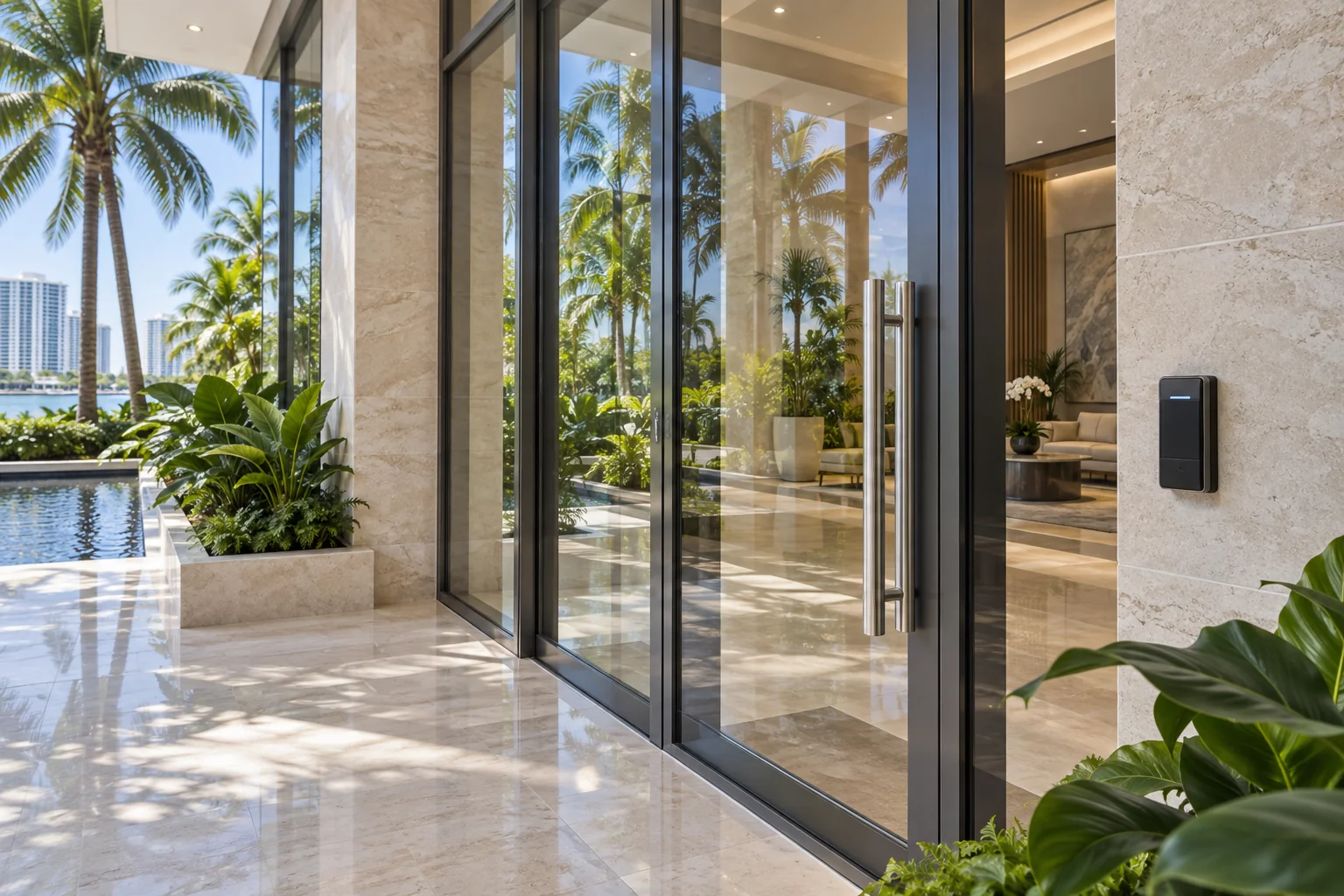
Waterfront homes often have large sliding glass doors that open to balconies, patios or pool areas. These doors are exposed to wind, rain and salt, and their tracks and latches collect sand and grit. A sliding door that no longer locks properly is a common concern, and the cause is often dirt in the track, a worn latch or a keeper that has shifted.
Clean the track gently and check that the door glides smoothly. If the latch does not meet the keeper cleanly, the door may have dropped on its rollers. Do not force a latch that does not line up, because that can bend parts. The page about a sliding door that will not lock describes what is usually happening.
A technician can also advise on secondary locks, such as a bar or a pin lock, that add protection without complicating daily use. The guide on security for sliding doors goes into the options. In rental units, check what is allowed before adding anything.
Remember balcony doors on higher floors still matter. Even if you feel far from the street, a door that is left unlatched can be reached from a neighboring balcony or a shared walkway in some layouts. Treat every exterior door as an entry, whatever floor you live on.
Keep the track and rollers in mind as a yearly chore. A vacuum and a soft brush clear most sand, and a silicone based lubricant suited to tracks helps the door glide. If the door still drags, the rollers may be worn. That is a door repair, though a locksmith can often tell you which parts need replacing and whether the lock itself is part of the problem.
Storm season and shutters
Hurricane season shapes life on the coast. Shutters and panels go up, residents leave and buildings are closed up for days. For locks, the issue is both the preparation and the return. A door that was fine when you left may swell, stick or have water behind its hardware when you come back.
Before the season, test each exterior door and gate. Make sure each deadbolt throws smoothly and each key works without effort. Tighten hinge screws and look at strike plates. If something rubs or drags, deal with it while the weather is calm. A little preparation avoids a stressful scramble when a storm is forecast.
After a storm, look again for signs of water or damage. Our guide to hurricane season lock and door checks offers a practical order. If someone has to check your unit while you are away, make sure they have a way in that does not involve leaving a key in an obvious place.
Think about your vehicle keys as well. Cars may be moved to a garage or off the island, and keys can go missing during the shuffle. Decide beforehand where each key lives and keep a spare in a separate location. A lost key at the wrong moment is an avoidable problem.
Also consider the garage and any storage rooms. These are often forgotten in preparation, yet they hold tools, supplies and sometimes bicycles or boating gear. Check the lock on each, confirm you still have the key and make sure the door closes properly. If a lock has been giving trouble, repair or replace it before the season rather than during it.
Car keys, fobs and the beach environment
Car keys take a beating in coastal life. Sand gets into key rings, salt water gets into pockets and fobs, and keys spend time in bags beside towels and sunscreen. A fob that has been wet may work intermittently or stop altogether. Often the cause is corroded battery contacts or moisture in the circuit.
If a fob stops working, replace the battery first, since that is the most common cause. If it still fails, do not keep pressing buttons or leave it near heat. A technician can test the fob and tell you whether it can be repaired, reprogrammed or needs replacement. The page about a key fob that stopped working explains the usual steps.
If you lose a key or break one, a mobile locksmith can often make a replacement at your location. The details depend on the make, model and key type, and you will need ID and proof of ownership. The page on car key replacement describes the service in detail.
Never leave a child or pet in a hot vehicle. If one is locked inside, call emergency services first and do not wait for a locksmith. Once everyone is safe, call for help with the lock.
A tip for beach days is to keep your key in a sealed pouch or a small waterproof container instead of leaving it in a bag. Keys exposed to sand and water wear sooner, and a worn key is a hazard for the lock it enters. If a key starts to feel rough or bent, ask for a fresh copy cut from the original, not from another worn copy.
Second homes, seasonal stays and vacant units
Many properties are used for part of the year or by rotating guests. When a home stands empty, key control becomes more important, not less. A spare key left with a friend, a property manager, a cleaner and a repair person adds up to several copies in several hands.
Rekeying between seasons or after a change in management gives a clean start. A technician can change the pins inside your existing locks so old keys stop working, and you receive a new set. For rental use, a smart lock with individual codes can avoid handing out keys altogether, although it needs battery care and a backup plan.
Check on the property while you are away. Ask someone you trust to look at the doors, test the locks and report any change. Humid air in a closed home can swell doors and corrode hardware over a short stretch. The guide on vacation rental lock management offers a practical approach for properties with changing occupants.
Think about turnover days. When one guest leaves and another arrives, a lock that sticks or a key that goes missing causes real trouble for both. Keep spare batteries on site, keep a backup entry method and make sure whoever cleans the property knows what to do if a lock misbehaves. A short written guide kept with the property saves many urgent calls.
Smart locks in a salty climate
Smart locks can work well near the coast, provided they suit the conditions. Look for a model with sealed electronics, a durable finish and a keypad that resists moisture. Battery contacts and mounting points are common weak spots, and a lock that is installed carelessly will suffer from water getting behind it.
Maintenance matters. Replace batteries on a schedule, wipe the keypad and exterior parts, and keep a mechanical key for backup. If the lock begins to beep, respond slowly or refuse codes, it is giving you a warning. Read the guide on smart locks in Miami humidity for more about what to watch.
Before installing, make sure the door is in good shape. A door that sticks in damp weather will strain any electronic lock. A technician can adjust hinges and the strike plate first, so the lock does not have to fight the door.
Be thoughtful with access codes. Give each person a separate code where the lock allows it, delete codes when they are no longer needed and avoid easy patterns like repeated digits. If the lock connects to a phone or hub, keep that account secure with a strong password. The lock is only part of the system, and the habits around it matter as much as the hardware.
Safes and valuables
Documents, jewelry, passports and small valuables often live in a home safe. Safes in humid climates need attention, since moisture can affect dials, keypads and batteries. If a safe will not open, avoid trying random codes repeatedly or forcing the handle, because that can lock out or damage the mechanism.
A technician can help when a combination is forgotten or a keypad fails, but they will ask for proof that the safe belongs to you. That is not a hurdle, it is how a responsible locksmith protects owners. The page on safe opening service explains what to expect.
Write down the combination and store it somewhere separate from the safe. Keep spare keys for any key operated safe in a different location. And change batteries on a schedule, since a dead keypad is the most common reason a safe seems stuck.
What to expect from a visit
The process is simple. You call, and a real person asks about your situation and location. The price is explained before work starts. The technician comes to you, does the work and checks it with you before the visit closes. Nothing should feel unclear.
Have ID and proof of ownership or permission ready. In a managed building, let staff know a technician is coming. If your association requires notice or approval, arrange it ahead of time.
Afterward, test every key and every lock that was touched. Keep new keys together and store spares carefully. A short written note of what was done and when is useful if you sell, rent out or call for help again.
Common questions
Why do my locks feel gritty near the ocean?
Salt and moisture in the air can corrode pins and springs inside a cylinder and leave residue on keys. Grittiness is an early warning. Stop forcing the key, avoid heavy oil, and have a technician look at it before the key breaks or the lock seizes.
Can I change my condo door lock myself?
Check first. Many associations treat entry doors as common elements and set rules on hardware and copies of keys. Ask your association or building manager what applies, and get any required approval in writing before arranging work.
What should I do if my sliding door will not lock?
Clean the track gently and check that the door glides smoothly. If the latch still misses its keeper, the door may have dropped or parts may be worn. Do not force it. A technician can adjust or replace the latch and suggest secondary locks.
My key fob got wet. What now?
Do not use heat to dry it. Remove the battery if you can, let it dry in open air and try a fresh battery. If it still does not work, a technician can test it and tell you whether repair, reprogramming or replacement fits.
How should I manage keys for a seasonal home?
Keep a short list of who holds a key and rekey when the list gets unclear. Consider smart lock codes for guests, with separate codes for each person. Ask someone you trust to check the home regularly while you are away.
What proof do I need for a safe opening?
Expect to show photo ID and something connecting you to the safe and the property, such as a lease, a bill or a purchase record. A responsible locksmith verifies ownership before opening a safe, which protects you as the owner.