 Home Advisor Locksmith
Locksmith services for salons, barbershops, nail studios and spas
Personal service shops combine open storefronts, private treatment rooms, expensive product and cash or card payments. Thoughtful locks keep clients comfortable and the business protected without feeling cold or heavy handed.
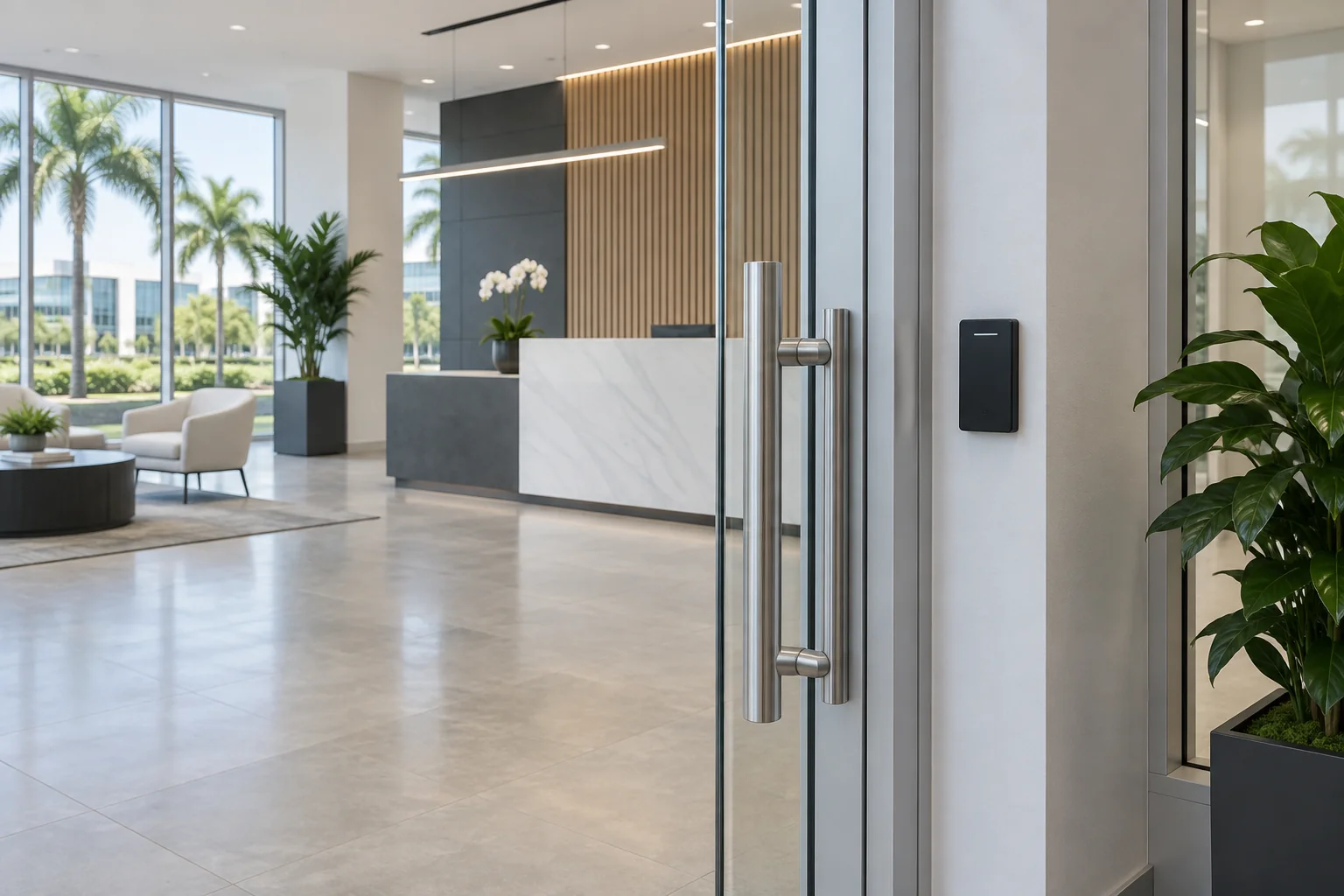
A welcoming space that still needs good locks
Salons and spas depend on atmosphere. Clients expect warmth, privacy and calm, and a visible wall of heavy security hardware does not fit that picture. Yet these businesses hold plenty worth protecting: retail product, professional tools, a register, appointment records, client contact details and the personal belongings of staff and customers. The challenge is protecting all of that without making the space feel like a vault.
Good hardware is mostly quiet. A solid front door with a proper deadbolt, a rear door that locks and cannot be easily forced, a staff only office with its own key, and treatment rooms with privacy latches all do their jobs without drawing attention. The most effective security in a personal service shop is often the kind that clients never notice.
This page covers the usual places a salon, barbershop, nail studio, lash bar, massage practice or day spa needs locks, and what a locksmith does at each. It is general guidance. Rules for commercial spaces, shared buildings and exit doors vary, so ask your landlord, building manager or local authorities what applies, and share the answers with the technician.
The storefront and front entry
Many salons sit in strip centers, plazas or mixed use buildings with glass fronts. Storefront doors are often aluminum framed glass doors with a narrow stile, which limits the lock choices. The usual options are a deadbolt that throws into the frame or a hook bolt, plus a lock cylinder at the top or bottom. Our page on storefront and glass door locks explains what suits these doors.
Appearance matters in a client facing space. Hardware should look clean and match the style of the shop, and it should be easy for staff to use when opening and closing. A lock that sticks or needs a trick to work becomes a daily annoyance, and tired staff may skip steps. Smooth, reliable operation is a security feature. If a door has begun to drag on the floor or the latch no longer lines up with the strike, have it adjusted early, because a door that must be lifted or shoved to lock will eventually be left unlocked.
Think about keyed access for staff and clients. Some shops have a reception desk and a single door that staff lock and unlock. Others have a keypad or smart lock so employees can enter without carrying keys, and codes that can be changed when someone leaves. For more on that approach, see access control and keypad locks.
- Choose storefront locks that fit the door's narrow frame.
- Keep hardware clean looking and simple to use at opening and closing.
- Consider keypad entry for staff so codes change when people leave.
- Ask the landlord what changes to the storefront are allowed.
The back door: deliveries, breaks and weak points
The back door of a salon is one of its busiest and most vulnerable spots. Staff step out for breaks, product deliveries arrive, trash goes out, and the door is propped open to let air in on a hot day. An open or propped back door is an invitation, and the habit often goes unnoticed because it feels harmless in the moment.
Hardware helps but habits matter more. A door closer that brings the door shut by itself, a deadbolt that staff engage after each use, and a peephole or small window to see who is outside all reduce risk. An alarm that sounds when the door stays open too long can encourage better habits. The door must always open easily from inside for safe exit.
Frames and strike plates are often the real weak spot. A strong lock in a thin frame fails at the frame. Longer screws, a reinforced strike plate and a solid door make a visible difference. Our guide on door frame and strike plate security explains why, and a technician can adjust or replace the hardware during a visit.
Treatment rooms, private rooms and privacy locks
Massage rooms, facial rooms, waxing rooms, tanning rooms and changing areas all need privacy. A client has to feel confident that no one will walk in unexpectedly. At the same time, staff need to be able to enter if a client needs help, and the room must remain safe in an emergency.
The usual answer is a privacy lock: a latch that locks from inside with a small turn or push button and can be released from outside with a simple tool kept by staff. These locks signal that the room is occupied and protect modesty, while still allowing emergency access. They are not meant to keep out a determined intruder, and they should not be used as a security lock for valuables.
Think about what to do with the key or tool. Keep it where staff can reach it at once in an emergency, and make sure everyone knows where it is. Train new employees on how privacy locks work and when to use the emergency release. If a room has a window or a second door, check that it is also secured when the room is in use.
Some spas offer rooms where a client is lying down, undressed or unable to call out easily, such as massage, wraps, floating or relaxation rooms. In these spaces, safety comes first. Staff should check on clients at sensible intervals, the room should never lock in a way that cannot be opened from outside, and the emergency release should be easy to find in dim light. A locksmith can fit hardware that suits the room while respecting those principles, and can adjust or replace a latch that has become stiff or unreliable.
Product storage and supply rooms
Retail product and professional supplies make up a large share of a salon's inventory. Shampoo, treatments, color, tools, towels, polish and skincare items can add up to real money and are easy to resell. A lockable stock room or cabinet keeps them from walking out the back, whether through theft by an intruder or the quiet shrinkage that sometimes happens inside.
Use a lock that fits the room. A stock room door with a solid frame and a deadbolt suffices for most shops. A glass display case at the front needs a lock designed for sliding or hinged glass, and our page on cabinet and filing lock service covers the small locks used on cases, drawers and cabinets.
Keep keys controlled. Only a few staff should be able to open the stock room, and the key should not travel on a general ring that many people use. If keys go missing, rekey the lock. Our page on lock rekeying explains how it works and why it is usually less expensive than replacing hardware.
Cash, cards and the register
A modern salon handles less cash than it once did, but many shops still keep a till, tips, petty cash and deposit bags. The register area should be arranged so that cash is not visible from the door or window, and money should not sit in the till overnight. A small safe in a back office is a sensible tool for short term holding.
If you have a safe, keep its code private and change it when staff change. Our page on safe combination reset and repair describes how combination changes and repairs work. Place the safe where it cannot be seen from public areas, and consider anchoring it to the floor or wall if the model allows.
Payment devices, tablets and computers also deserve attention. A locked office door, a cable lock or a lockable drawer discourages casual taking. The office door itself should be sturdy and have its own key. For broader thinking about business doors, see our page on commercial locksmith services.
Booth renters, shared spaces and multiple key holders
Many salons rent chairs or suites to independent stylists, barbers, estheticians and nail technicians. Each renter may want their own access, their own storage and their own control of their space. That raises questions that a single owner shop does not face: who holds the front door key, who can enter after hours, and what happens when a renter leaves.
A master key system or a keypad system can solve this. Each renter may have a key to their own suite, a key to the shared entrance and nothing else, while the owner holds a master. Codes can be issued individually and removed when someone leaves. Our page on master key systems explains how access levels are arranged.
Write down the rules. When a renter joins, record which keys or codes they receive. When they leave, collect keys, remove codes and rekey if a key is missing. Our guide to a business key control policy offers a simple framework. These steps protect everyone, including the renters who stay.
Talk with renters about their own storage as well. A stylist may keep expensive tools, a colorist may keep stock, and a nail technician may keep supplies in a rolling cart. Each person decides how much protection they want for their own space, and the owner decides how much the building provides. A lockable drawer, a cabinet or a small suite door can be keyed separately, which leaves the common areas under the owner's control and avoids disputes about who had access.
Leases, landlords and shared buildings
Most salons and spas lease their space, and the lease usually says something about locks. Some landlords require that they hold a key or that cylinders match a building system. Some require approval before hardware is changed, especially on exterior doors or storefronts. Read the lease and talk to the landlord or building manager before making changes.
Fire safety rules also apply. Doors that serve as exits must open easily from inside in an emergency, and the rules for such doors vary. Do not add chains, extra bolts or key operated locks on the inside of an exit door without checking what is allowed. Our guide on fire code and exit door hardware questions lists the questions to bring to your local authorities.
If you share a building with other tenants, coordinate with them about common doors, loading areas and shared hallways. A locksmith can work with the landlord's system or suggest improvements that the landlord can approve. Bring the lease details with you when you call, so the technician understands your constraints.
Insurance for the shop may include conditions about locks and doors. Policies differ, and this page cannot say what yours requires. Ask your insurer or agent whether they have expectations about deadbolts, door types or alarms, and keep any written answers with your records. If you later upgrade hardware, send the insurer a short description so the policy stays aligned with the building as it actually is.
Humidity, chemicals and wear on hardware
Salons and spas are tough on locks. Steam, hair products, sprays, acetone, bleach and cleaning chemicals drift through the air and settle on surfaces. Locks near sinks, shampoo bowls or nail stations can gum up or corrode. Miami Dade humidity and, near the coast, salt air add to the problem.
Choose hardware with durable finishes and clean it gently. Avoid strong solvents on lock cylinders, and ask the technician what to use. Our page on lock lubrication and maintenance explains why the wrong product can make things worse. A key that is hard to turn is a warning, so address it before it breaks.
Check privacy locks and cabinet locks regularly, since small mechanisms wear down with constant use. Replace them at the first sign of looseness. A scheduled walk through every month or two, written on a short checklist, prevents surprises on a busy day.
Hurricane season deserves a place on the calendar too. Before a storm, make sure the front and back doors latch fully, that no door is warped enough to stay open, and that important items are moved off the floor. After a storm, check that doors still close and lock as they should. Our guide on hurricane season lock and door checks lists what to look at, and much of it applies to a small shop as well as a home.
How a visit works and what to prepare
Call and describe the shop: the type of business, the doors involved, the existing locks and what is going wrong or what you want to improve. A real person answers and writes down the details. The price is explained before work starts, and the technician comes to you.
Schedule work when it will not disturb clients. Many shops prefer mornings before opening or evenings after closing. Tell the person on the phone about your hours, your landlord's rules and any renters who need to be informed. If the building has an alarm, make sure the technician knows how to avoid setting it off.
Before the visit closes, the work is checked with you. You test each key, code or latch, and confirm that the doors close and lock smoothly. Ask for a list of keys issued and any codes changed, and store the list in a protected place. A tidy record makes future changes simple and helps when staff come and go.
Opening and closing routines deserve the same care as hardware. A short written checklist covering the front door, back door, stock room, office, register and any treatment rooms helps the last person out confirm that everything is secure. Include a walk through the restrooms and treatment rooms so that no one is locked inside, and a check that appliances such as heaters, wax pots and irons are off. A habit that takes two minutes each night protects the business more reliably than any single piece of hardware.
If your shop has an alarm, keep the code private and change it when staff change, just as you would a door code. Tell the technician about the alarm before the visit so that doors with sensors are handled with care. Hardware that is adjusted or replaced near a contact sensor may need the sensor realigned afterward, and your alarm company can help with that step. Keep their contact details with your other building records so the call is easy to make when it is needed.
Common questions
What kind of lock suits a glass storefront door?
Glass doors in aluminum frames usually take a narrow stile deadbolt, a hook bolt or a lock built into the door. The right choice depends on the door, the frame and your landlord's rules. A technician can look at the door and recommend hardware that fits and still looks clean.
Can treatment rooms have locks that clients cannot misuse?
Yes. Privacy locks lock from inside for modesty and can be released from outside with a simple tool kept by staff. They are meant for privacy, not security, so valuables should be kept elsewhere. Train staff on where the release tool is and how to use it.
How do we handle keys when a booth renter leaves?
Collect their keys, remove their codes and record the change. If any key is missing, rekey the affected locks so old keys stop working. A master key or keypad system makes the process easier because you can change one renter's access without touching everyone else's.
Should our back door have an alarm?
An alarm that sounds when the door is held open can encourage better habits, but it is a decision for you and your landlord. Pair it with a door closer and a deadbolt that staff use. The door must always open freely from inside for safe exit.
Do we need the landlord's permission to change locks?
Often yes, especially for exterior doors, storefronts and shared areas. Read your lease and ask the landlord or building manager before work. Requirements vary, and the technician can work within the rules once you tell them what they are.
Can lock work be done outside business hours?
Often it can. Many shops choose mornings before opening or evenings after closing. Tell the person on the phone about your hours and any building rules when you call, and the plan and the price are explained before work starts.