 Home Advisor Locksmith
Locked Out of a Miami High Rise: Management, Front Desk and Locksmith Roles
A lockout in a tall building involves more people than a lockout in a house. This guide explains what management, the front desk and a locksmith each do, so you can make the right calls in the right order.
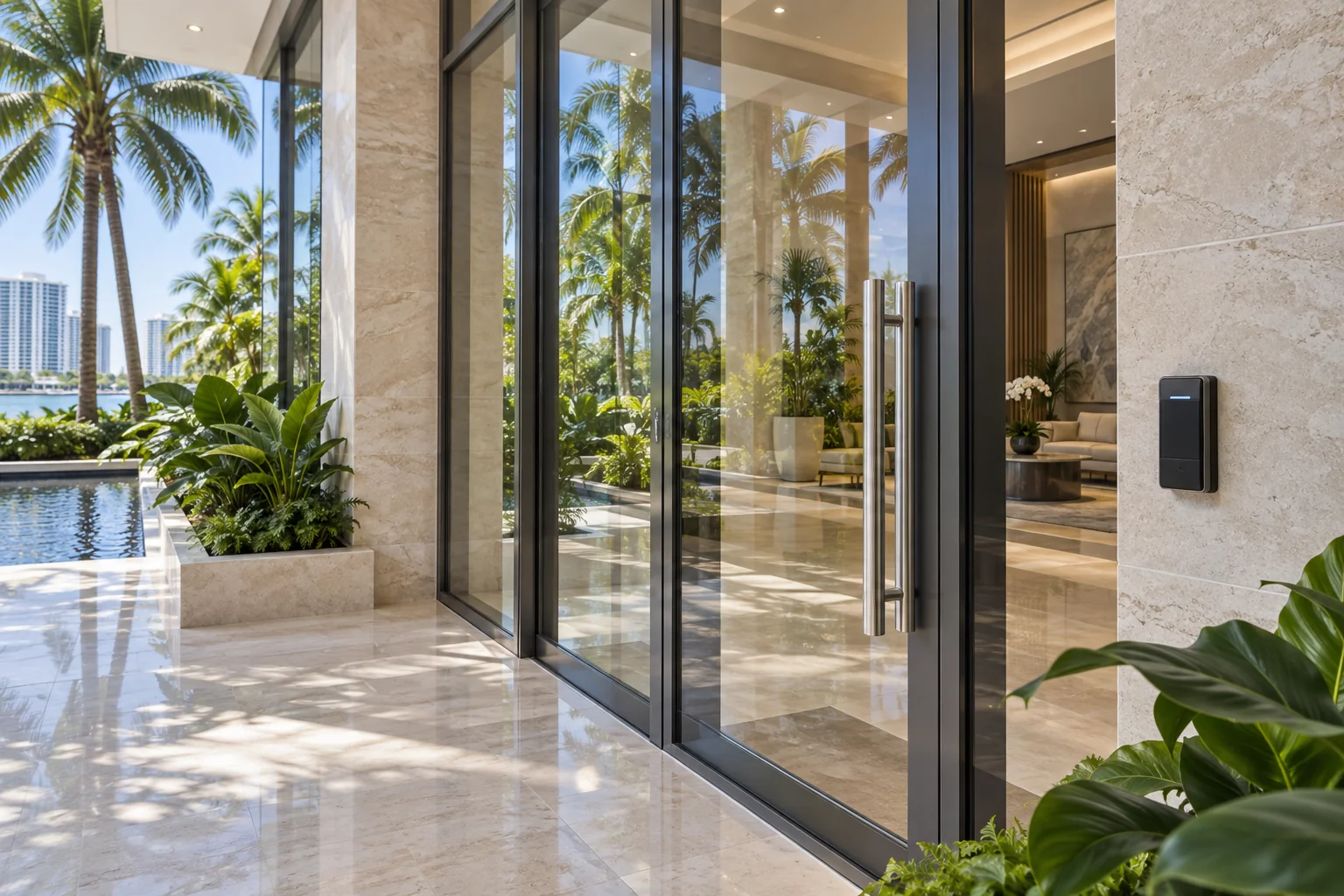
Why a tall building changes the whole problem
In a single family house, a lockout is simple. You, a door and someone who can open it. In a high rise, the same door sits inside a system: a lobby, an elevator, a hallway, sometimes a keyed or fob controlled floor, and a corporation or association that has views about who may do what. The lock on your unit is only one layer of it.
That is why people feel stuck in a way they would not at a house. You may be standing in a hallway with no phone charger, no wallet and a fob that works downstairs but not on your own door. Each of those facts points to a different person who can help. Knowing which person owns which piece saves a lot of walking back and forth.
Another difference is privacy. A hallway in a tall building is shared space, and neighbors, delivery staff and cleaners pass through it. Standing there with a locksmith and a toolbox draws attention, which is one more reason the desk and management should know what is happening. A visit that is announced and explained feels ordinary to everyone, while an unannounced one can prompt questions you would rather avoid.
This page is general guidance for Miami Dade condo and apartment residents. Every building runs its own rules, and nothing here replaces what your association documents say. Treat it as a map of the usual roles, then confirm the details with your own building.
What the front desk can and cannot do
The front desk is usually the first stop, and it is a good one. Staff can often confirm you live in the building, tell you whether a management office is open, and explain the building's own lockout process. Some desks hold a sealed spare key or a logged emergency key for certain units. Many do not, and that is a deliberate choice by the association, not a lapse in service.
What the desk generally cannot do is decide on its own to open a unit for a person it cannot verify. A calm, direct request works better than an argument. Say your name, your unit, that you are a resident or an authorized occupant, and that you are locked out. Be ready to show identification if you have it, or to ask the desk to call someone who can vouch for you.
Front desk staff also know things you do not: which vendors the building accepts, whether outside service providers must be announced, and whether a loading or service entrance is the required route. Ask these questions before anyone arrives, because the answers shape the rest of the visit.
One more point about the desk: staff change shifts, and the person who helped you last time may not be on duty. Do not assume that a past arrangement still holds. If a desk employee once told you that a spare was kept for your unit, ask again and ask for it to be confirmed with management, because records of who holds which key tend to drift over time.
- Tell the desk your name, unit and that you are locked out.
- Ask whether the building holds an emergency key for your unit.
- Ask whether outside service providers must be registered first.
- Ask which entrance and elevator a service provider is expected to use.
- Ask whether the management office needs to approve the visit.
What building management or the association decides
Management or the association sets the policy around your door. That can include whether the door hardware must stay a certain type, whether the building keeps a master or emergency key, and whether any lock change must be reported. Some buildings treat the entry door as part of the shared structure, others treat the lock as yours but the door and frame as the building's. Which one applies to you is a document question, not something anyone can guess from the hallway.
Management also controls the practical side of access. Elevators may be locked out of service use, parking for a service vehicle may need approval, and guests may need to be listed. If you hire someone, management is often the office that tells them where to go and what to bring.
It is also worth asking what happens if the association needs to enter your unit while you are away, for example during a leak, a fire alarm check or a pest treatment. Some buildings keep an entry key or a lockbox for this purpose, and that arrangement affects how you approach a lock change or an upgrade. Asking now saves an awkward surprise later.
When in doubt, ask management in plain words: who is allowed to open or alter my unit door, and what do you need from me first? Our guide on condo lock rules and keys goes into the kinds of questions worth asking before you ever need them.
Where a locksmith fits in
A locksmith handles the door itself. That means working out what kind of lock you have, confirming that you are entitled to get in, opening the door in a way that does not damage it where possible, and testing it afterward. A locksmith does not hold the building's records, does not grant building access, and cannot overrule an association rule.
This is why the order of calls matters. If the building requires notice, a locksmith who arrives unannounced may be turned away at the lobby, which wastes everyone's effort. Tell the locksmith up front that the unit is in a managed building, share any entry instructions the desk gave you, and let them tell you what they need on arrival.
A good locksmith will also tell you plainly when a job is outside what they should do. If the lock belongs to the building, or the door is part of a fire protection assembly that the association controls, the right answer may be to stop and send you back to management. That is not a refusal to help. It is the correct way to keep your door, your neighbors and your building in good order.
For a general overview of residential openings in the county, see residential lockout help. When you call Home Advisor Locksmith, describe the building type and your situation, and the process is explained before any work begins.
Proving the unit is yours
Ownership or authority is checked before any door is opened, and that is true in every building. In a high rise it can happen twice: once by the front desk, and again by the person who opens the door. This is not a hurdle placed in your way. It protects you, because the same checks would stop a stranger from walking into your home.
What counts varies by situation. An owner might have a deed or association paperwork. A tenant might have a lease and a letter from a landlord. A guest or family member might need the owner to confirm by phone. A host with a short term rental might need to show a booking and a management contact. If you have a photo of a document on your phone, that can be enough to start the conversation.
If you cannot produce anything right away, say so honestly and ask what alternatives exist. Often the desk can phone the owner or the management office, and that call resolves it. Never offer to fake or stretch the facts. A truthful answer that takes a little longer beats a refusal that ends the visit.
There is also the matter of who is standing next to you. If a friend or relative is with you but is not on any record, the desk may be unwilling to let them vouch for you. In that case a phone call to the owner or the management office is the cleaner route. Plan on this being a conversation, not a form, and keep your tone friendly even if it feels slow.
- Photo identification that matches the name on record.
- A lease or a note from the landlord, for tenants.
- Association or ownership paperwork stored on your phone.
- A phone call from the owner to the desk or management office.
- Booking details and a host contact, for short term rental guests.
Fob, keypad or key: what failed matters
Before calling anyone, take a breath and work out what actually failed. Many high rise doors are not locked out by a missing key. A fob may have lost its charge or been deactivated. A keypad lock may have run out of battery. A smart deadbolt might have lost its connection to a phone. Each of those has a different fix, and some do not need a locksmith at all.
If the lock has a keypad and shows no lights, a depleted battery is a reasonable suspicion, and many keypad locks have a way to restore power from outside. Check the lock's own instructions or ask the desk whether they have seen it before. Our page on battery and power problems in smart locks explains what to look for.
Do not forget the most basic checks. Confirm you are at the right door, since floors in tall buildings look alike and it is easy to pick the wrong hallway after a long day. Try the inside thumb turn if someone is home. Check whether a second entrance, such as a balcony or service door, is something you can legitimately use. If none of these works, you have your answer and can call for help with confidence.
If a fob works at the lobby and the elevator but not at your door, the problem is probably the lock, not the building. If the fob fails everywhere, the building's access office needs to know. Telling the right person which one it is spares everybody a guessing game.
Calling a locksmith from the hallway
Once you know what failed and what the building requires, you can describe the situation clearly. Say that you are in a multi unit building, which floor you are on, what type of lock you think you have, and whether the building asks for notice. If you can see the lock, mention whether it has a keyhole, a keypad, a thumb turn on the inside, or a deadbolt separate from the handle.
While you wait, there are practical things to do. Charge your phone from the lobby if you can. Keep your identification handy. Ask whether the desk will let you wait in the lobby instead of the hallway. Let the desk know when to expect a visitor, and give them the name of the company rather than leaving the staff to guess.
It is reasonable to ask the locksmith how they plan to protect the door and surroundings in a shared hallway, for instance by keeping tools and packaging out of the walkway and leaving the area tidy. Hallways have carpet, finishes and neighbors, and a considerate visit is part of the job. Keep elevators and walkways clear for others, and let the desk know when the work is finished.
The process is the same here as anywhere. You describe the place, ownership or authority is checked, the work and the price are explained before work begins, and the finished door is tested with you. Our broader guide on what to do when locked out covers the calm first steps that apply in any home.
Salt air, humidity and the Miami building factor
Coastal buildings add a quiet factor to lockouts. Salt air and humidity wear on hardware over time, and a lock that sticks, drags or feels gritty may be closer to failure than it looks. A high rise balcony door, in particular, sees more weather exposure than most interior doors, and the hardware can stiffen.
If your lockout happened because a key stopped turning smoothly, treat it as a warning, not a fluke. Once you are back inside, ask your locksmith to look at the lock and the door alignment. Doors in tall buildings also shift slightly with seasonal changes and with the building's own movement, and a small misalignment can strain a latch.
If your building has a rooftop, pool deck or garage level where doors are exposed to wind and spray, you may notice that those locks fail more often than interior ones. That is a good reason for building staff to include lock care in routine maintenance. Mention any sticky or gritty door you notice to management, even when it is not your own unit. Small reports help prevent larger failures.
Hurricane season adds its own routine. Buildings often have shutters, storm checklists or temporary access procedures, and those can change who is on site and when. Find out your building's storm process well before it is needed. Our hurricane season lock and door checks page lists what to look at around your own door.
Owners, tenants and hosts: different roles, different calls
The right first call depends on who you are. An owner usually deals with the association and the front desk directly. A tenant often needs to bring the landlord or the property manager into the conversation, because the lease may say who handles lock service and who pays. A short term guest typically calls the host, who in turn knows the management office.
Property managers and landlords have their own worries: they want a record of who entered, and they want the unit left secure. If you manage rentals, our guide on tenant turnover lock checklist shows how to handle keys between occupants, and the vacation rental lock management page covers hosts and guests.
Tenants with their own questions can start with renter lock questions. The short rule is simple: if the lease does not clearly say you may change or alter a lock, ask before anyone touches the hardware, and keep the answer in writing.
After you are back inside
Getting through the door is only the first half. Once inside, check how the lock and door behave. Does the key turn cleanly? Does the latch catch without a push? Does the deadbolt throw all the way? A door that works only when lifted or pulled is telling you something, and it costs less effort to fix it now than the next time you are locked out.
Think about the key situation as well. If a key was lost rather than just forgotten, whoever found it could know which building it belongs to. In that case, rekeying the lock is worth discussing, and your building may need to be told. If the problem was simply a spare nobody could find, read about spare key strategies and decide who in your life holds a copy.
If you use codes for cleaners, family or contractors, go over them now. The guide on keypad codes for guests, cleaners and contractors suggests simple habits, and the smart lock installation page explains the options for an upgrade, if the building allows it.
Common questions
Who should I call first if I am locked out of a high rise condo?
Start with the front desk or building staff, since they know the building's lockout process and whether outside service providers need notice. Then call a locksmith with the details they give you. Telling the locksmith that the building has rules about visitors helps them arrive prepared and avoids being stopped in the lobby.
Can the front desk just open my door for me?
Sometimes, but not always. Some buildings keep an emergency key and a process for using it, while others do not hold keys at all. Staff usually need to confirm that you live there first. Ask politely what the building's policy is, because it differs between associations and cannot be assumed.
Do I need management approval before a locksmith comes in?
It depends on your building. Some associations require notice or a registered vendor, and others only expect the visitor to be announced at the desk. Requirements vary, so ask management or the front desk before the visit. Home Advisor Locksmith can talk through what to mention, but the building has the final word.
What if my fob stopped working but my key is fine?
Try the key first, since a mechanical key is often a separate way in. If the fob fails at the lobby or elevator as well, tell the building's access office, because the fob may need to be reset or replaced. If it fails only at your unit, the lock itself may need attention.
I am a tenant. Can I have the lock changed after a lockout?
Check your lease first and talk to your landlord or property manager. Many leases limit changes to locks without permission, and some buildings need to keep a copy of the key. Getting approval in writing protects you. Once approved, a locksmith can rekey or replace the lock and test it with you.
How do I prove the unit is mine if I left my wallet inside?
Think about what else can vouch for you. A photo of a lease or ownership paper on your phone, a call from the owner to the desk, or confirmation from management can all help. Be honest about what you lack, and ask the staff what they can accept. Ownership or authority is always checked before a door is opened.