 Home Advisor Locksmith
Locksmith Guidance for Sunny Isles Beach Living
Many people in Sunny Isles Beach live in buildings with shared entrances, fobs and associations. This page is general guidance on lockouts, rekeying, car keys and smart locks, written for Miami Dade conditions.
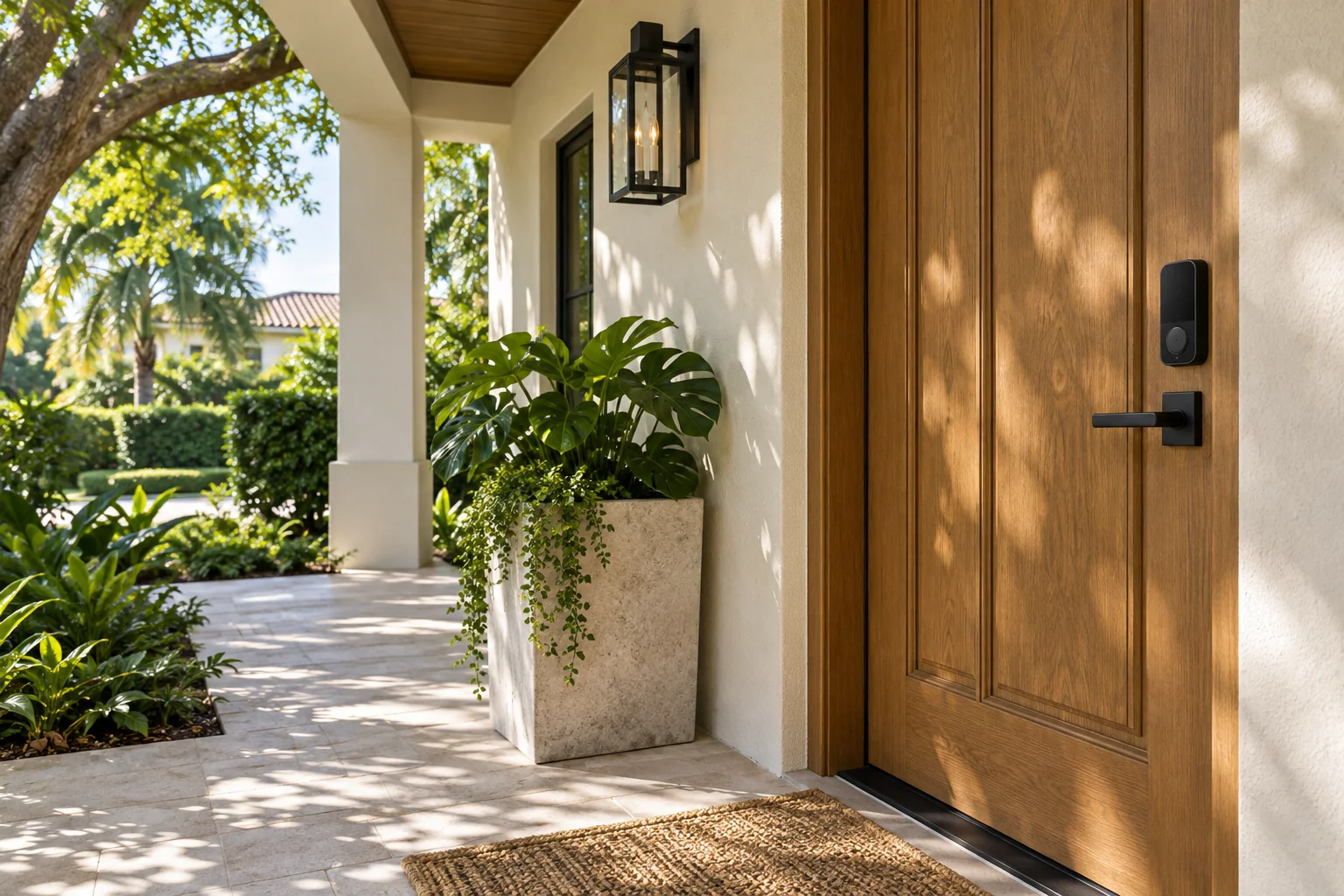
Living with shared doors and personal locks
Life in a high rise or a large residential building means your security is a mix of things you control and things you do not. Your unit door, its deadbolt and its key are yours to look after. The lobby entrance, the garage gate, the elevators and the mail area belong to the building. A locksmith conversation goes better when you know which category your problem falls into, because the people who can authorize work are different in each case.
This page is general guidance for people in Sunny Isles Beach and the nearby coast. It does not describe particular buildings, and it does not say that Home Advisor Locksmith has worked at any address in the area. It simply gathers practical advice for the kinds of locks and keys that people in a coastal Miami Dade community tend to deal with, so you can make a calm decision when something goes wrong.
The service is mobile and covers every ZIP in Miami Dade. A real person answers when you call, the price is quoted before the truck rolls, the technician comes to you, and the work is checked with you before the visit closes. If you are not sure whether your problem is a locksmith problem or a building problem, describing it to the person on the phone is a good first step.
The unit door: what you can usually decide yourself
For most owners and many renters, the lock on the unit entry door is the single most important lock in the home. It usually has a latch that holds the door shut and a deadbolt that adds a stronger barrier. The deadbolt's strength depends on how far the bolt extends into the frame and how solid the strike plate and frame are. A strong deadbolt on a weak frame is a weaker door than it looks.
Whether you may change or rekey the lock on your unit door depends on your association's rules and on your lease if you rent. We do not state those rules here because they vary from building to building. Before you make any change, ask your association or building manager what is required, and whether they need a copy of the new key. Our guide on condo lock rules and keys explains the questions to bring.
If you are locked out of a unit, the wisest first step is often to ask whether the front desk or management holds an emergency key. If not, a locksmith can help, and being ready with identification and proof that you live there makes the visit smoother. The page about being locked out of a condo goes through what to expect step by step.
Fobs, cards and keypads at shared entrances
Large buildings often replace metal keys at the main entrance with fobs, cards or keypads. These access systems are managed by the building, not by an individual locksmith visit to your home. If your fob stops working, the first call is typically to management, since they control which fobs are active. A locksmith becomes useful when the problem is a physical lock on your own door or a hardware issue on equipment you are responsible for.
It helps to understand the differences between these technologies. A key card is usually a flat card read by a reader. A key fob is a small token that does the same job and fits on a key ring. A keypad needs only a code. Each has strengths and weak points, and the comparison of key cards, fobs and keypads explains how they differ in daily use, in what happens when one is lost, and in how easily access can be changed.
Lost fobs deserve attention. If a fob goes missing, tell management so it can be deactivated, because anyone who finds it could use it. This is the electronic version of a lost key, and the response is the same: assume it could be in the wrong hands until it is made useless. Keeping a note of which doors each fob opens makes this much simpler.
Another point worth knowing is that fobs and cards are not all the same inside. Some are simple tokens that a reader recognizes by a fixed code, while others use more complex methods that are harder to copy. Which type your building uses is the building's decision, so if you have concerns about copying or lending, raise them with management rather than assuming. A locksmith can explain how different systems work in general, but cannot make decisions for a system the building owns.
- Report a lost fob or card to management right away so it can be turned off.
- Ask who holds spare fobs and how new ones are issued.
- Keep a record of every door a fob or card opens.
- Do not lend an access card to someone you cannot easily contact later.
- Ask whether your unit door also has a physical key as a backup.
Salt air and what it does to hardware
Coastal air is hard on metal. Fine salt settles on every exposed surface, and in humid weather it works into moving parts. For locks, that can mean stiff keys, slow latches and cylinders that feel rough. Balcony doors and sliding doors that face the water are especially exposed, because they sit in the full path of the air. If your balcony slider is hard to lock or the latch feels gritty, that is often a sign that cleaning or replacement is due.
Lubrication helps, but the wrong product can attract dirt and make things worse. Technicians generally prefer products made for lock cylinders rather than general purpose oils. A short visit for cleaning and checking can extend the life of hardware and often reveals problems before they become lockouts. Our guide on salt air and lock corrosion covers the signs to look for.
Material choice also matters. Brass and stainless steel resist corrosion better than plain plated steel. If you are replacing hardware on a coastal unit, ask the technician which finishes last longest in salty humid air, and whether the lock is suited to being used so close to the water. It is a fair question and a good technician will answer it directly.
Balcony and sliding door locks
A sliding glass door usually has a simple latch that grips a catch on the frame. It was designed more for convenience than for strength, and it is often the weakest point of a unit. Many people add a secondary measure, such as a bar that sits in the track or a pin lock that stops the door from sliding. These measures are inexpensive compared with the peace of mind they provide.
On higher floors, people sometimes assume balcony doors need no extra security. That is a personal call, but it is worth thinking about. Doors can be reachable from neighboring balconies, and a door left unlocked while you are away is unprotected no matter what floor you live on. At minimum, make sure the latch engages fully and the door closes smoothly in its track.
If your slider drags, rattles or will not lock, the sliding door and patio lock service describes how a technician approaches it, and the page on a sliding door that will not lock lists common causes in plain language, such as dirt in the track, worn rollers or a misaligned latch.
One more detail: a sliding door can feel loose simply because the glass panel has shifted on its rollers over time. Lifting and adjusting a panel is a job for a technician or the building's maintenance team, and it should not be forced. If the door sits crooked, the latch may never line up properly no matter how new the hardware is, so the roller and track condition often matter as much as the lock itself.
Rekeying when residents change
In a building where units change hands or renters come and go, rekeying is a practical way to keep control of who has access. Rekeying changes the internal arrangement of the pin tumbler cylinder so that old keys no longer turn it. The lock body stays on the door, and you receive new keys that fit the new arrangement.
This matters most at move in. You cannot know how many copies of a key exist from a previous resident, a cleaner, a contractor or a relative. Rekeying removes that uncertainty. If your association requires a copy of your key for emergencies, ask how to provide it after rekeying so the arrangement stays in order.
Not every lock is a good candidate. If the hardware is worn, damaged or poorly fitted, replacement may serve you better. The page comparing rekeying and a new lock set explains the trade offs, and a simple order of operations for a move helps: check every exterior door, decide which locks to rekey, then collect and number the new keys.
Think about how many keys you actually need. A household of two rarely needs six copies, and every extra copy is another key to track. Label them in a way only you understand, store the spares somewhere secure inside the home, and keep a short written list of who holds which key. When a key does go missing, that list tells you at once how serious the problem is and which door to deal with first.
Car keys, valet and garage habits
Many residents of coastal buildings have a vehicle parked in a shared garage, often with a valet or with a fob that opens a gate. Car keys travel through more hands in that setting, which makes it sensible to know what kind of key you have. A plain metal key opens a door only. A transponder key contains a chip that the car must recognize before it starts. A smart key lets you start the vehicle without inserting anything.
If a key is lost, a locksmith can often make a replacement once ownership is confirmed. Be ready with registration and identification, and tell the person on the phone the make, model and year. Some vehicles have extra steps, and a technician can explain them before work starts. The car key replacement service page goes further, and the guide for when both car keys are lost is useful if you have no working key at all.
A good habit is to keep a spare key in a safe place at home, not in the car and not in a hiding spot outside. Spare keys left in obvious places are easy for others to find. If you use a valet, give only the key the valet needs and keep your home keys separate where you can. These small habits prevent many of the lockouts and losses locksmiths see.
Smart locks and your internet connection
A smart lock can be a good fit for a unit, especially if you share the home or have guests. It lets you create codes instead of handing out keys, and some models record which code was used. The trade offs are batteries, wireless connections and the need to keep the software updated. Before you buy, ask your association whether electronic locks are allowed on unit doors and whether the building needs to keep a mechanical key option.
Humidity and salt air can affect the keypad and the electronics, so pick a model that handles damp conditions and keep the keypad clean. When the batteries run low, the lock usually tells you with a beep or a light. Do not ignore it. A lock that fails because of a dead battery can lock you out of your own home.
If you are weighing options, the smart lock installation service describes what a technician looks at on a door, and the comparison of a smart lock and a keypad lock clarifies which features you are actually paying for. Often a simple keypad is all a household needs.
Think also about guests and helpers. A smart lock lets you give a cleaner, a dog walker or a relative their own code and cancel it when the arrangement ends, which is neater than collecting keys. Just keep a mechanical way in, such as a key kept somewhere safe, so that a dead battery or a failed connection never becomes a lockout. Ask the technician how the lock behaves if its power or connection is lost.
How to describe a lockout so help is ready
When you call, start with your location and what you are trying to open. In a large building, mention the kind of door, whether you are in the hallway or outside the building, and whether the lock is a key, a keypad or a fob. If the problem could be shared hardware, say that, because the technician may need to coordinate with the building.
Say whether anyone is inside the unit, especially a child or an older adult. Say if you have identification and proof of residence on hand. Say whether the door has been forced, damaged or modified. These details change what the technician plans, and they save you from repeating yourself when they arrive.
If a child or pet is locked in a vehicle, call emergency services first. Do not wait for a locksmith. Once the immediate danger has passed, a technician can help with the lock. For lockouts that are not an emergency, taking a minute to gather your thoughts and documents is the most helpful thing you can do.
Businesses and offices along the coast
Not everyone in the area lives in a condo. Small shops, offices and service businesses operate nearby, and they have their own lock needs. A storefront door sees constant use, so cylinders wear sooner. Offices often want a tidy key system, perhaps with a master key for a manager and individual keys for staff.
Key control is the main idea. Know who holds keys, keep a record, and rekey when a key goes missing or a person leaves. The commercial locksmith service explains the work we do for businesses in general, and the locksmith for offices page is a good starting point for an office door plan.
If you operate a vacation rental or manage guest turnover, codes and regular rekeying can keep things organized between guests, and each change should be written down so nothing is left to memory. Whatever the setting, the aim is the same: the right people can get in, and the wrong people cannot.
Common questions
Who should I call first if I am locked out of a condo unit?
Start by checking whether the front desk or building manager holds an emergency key, since that may solve it. If not, call a locksmith, describe the door and your location, and have identification and proof of residence ready. Association rules vary, so ask management what is allowed for your unit door.
Can a locksmith fix a building fob or entrance reader?
Usually the building manages its own access system, so start with management. A locksmith is most useful for the physical lock on your unit door or for hardware you are responsible for. If the building asks you to arrange work on shared equipment, confirm permission with the association first so there are no surprises.
Is it a good idea to rekey my unit door when I move in?
Often yes. Rekeying makes every earlier key useless, which removes the uncertainty about who may hold a copy. Check your lease or association rules first, and ask how to give management a copy of the new key if they require one. A technician can tell you whether your lock is a good candidate.
How does salt air affect balcony door locks?
Salt in the air settles on metal and, with humidity, can corrode latches, tracks and cylinder parts. Locks may feel gritty or stiff and sliders may drag. Cleaning and the right lubricant help, and corrosion resistant finishes last longer. If a latch no longer engages fully, have it looked at before it fails.
What proof will I need to get a car key replaced?
Expect to show identification and proof that the vehicle is yours, such as registration or a title document. Tell the person on the phone the make, model and year when you call. Requirements differ by vehicle, and the technician will explain the steps and the price before any work begins.
Does this page mean you have worked in Sunny Isles Beach?
No. This page is general guidance for people in Sunny Isles Beach and does not claim any past work at specific addresses. The service itself is mobile and covers every ZIP in Miami Dade, and the same process applies everywhere: describe the situation, hear the price, and have the work checked with you.