 Home Advisor Locksmith
Glass door and storefront security ideas
A glass front invites customers in, and it also raises fair questions about security. This guide explains how to think in layers, so your storefront stays open and welcoming without being left to a single lock.
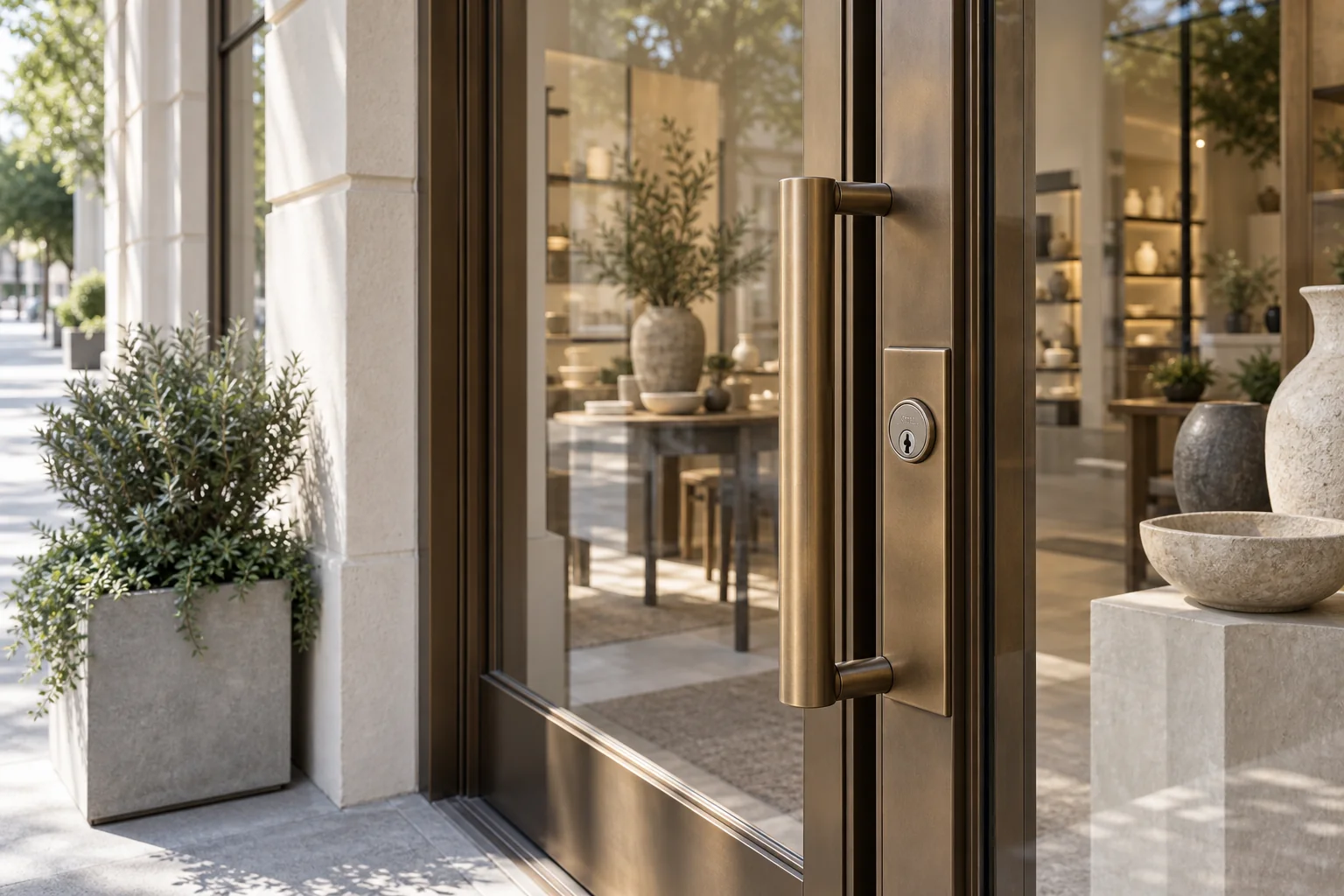
Why glass fronts feel different
A glass storefront is a promise to the street. It says the shop is open, the goods are visible and customers are welcome. That openness is good for business, and it is exactly why many owners worry about security. When your wall is mostly glass, you cannot hide behind thick masonry, and the way you protect the shop has to be more thoughtful.
The worry is understandable, but it should not lead to panic or to a fortress. Plenty of successful shops keep glass fronts and sleep well at night. They do so by thinking in layers, where no single item has to carry the whole job. A good lock, a sound frame, sensible lighting, tidy habits and the right records all contribute.
This page offers ideas and questions, not a script. We do not explain how any lock or glass system can be defeated, and we do not need to. The goal is to help you ask good questions of a technician who can look at your actual door, in your actual building, and tell you what fits.
It also helps to be honest about what you are protecting. A flower shop with fresh stock, a phone repair counter with small valuable items, a restaurant with a cash drawer and an office with a reception desk all face different risks. Write down what is inside that would be hard to replace, what would be inconvenient to lose and what is simply stock. Spend your attention in that order, starting with the things that matter most.
Think in layers, not in a single lock
Security is strongest when several modest measures support one another. Picture concentric rings around what you want to protect. The outer ring is the street and the sightlines. The next is the building envelope: door, frame, glass, shutters. Then come the locks, and then the interior: display cases, a cash area and a safe. If one layer is weak, another makes up for it.
Layers also help you spend wisely. Rather than buying the single most expensive product, you can look at your shop and ask where a small improvement adds the most. Maybe the door is solid and the frame is loose. Maybe the lock is strong and the lighting is poor. Maybe the routine at closing is the missing piece. A short walk through the shop with a notepad, asking at every opening what would worry you if you were a stranger looking in, will reveal more than any catalog.
This idea also protects you from overbuilding. Heavy bars, thick grilles and dense signage can make a shop look closed even when it is open. Choose measures that fit your type of business and your neighborhood, and keep the front attractive. Customers should feel welcome while the shop is protected.
Be wary of copying what a neighboring shop has done without asking why. A heavy gate that suits a jewelry counter may be unnecessary for a bakery, and a lock that suits a corner unit with two entrances may not suit a middle unit in a row. Ask a technician to explain the reasoning behind each suggestion, and weigh it against how your own shop operates from day to day.
- The outer layer: lighting, visibility and a tidy exterior.
- The building layer: door, frame, glass and shutters.
- The lock layer: cylinders, deadbolts and hardware.
- The interior layer: cases, cash area and storeroom.
- The habit layer: routines, key control and records.
The door itself: frame, hinges and alignment
On a glass door, the lock is often fitted into a narrow metal stile, and the frame around it is a major part of its strength. Check that the frame is straight, firmly fixed and clear of corrosion. Salt air and humidity can eat at metal, particularly near the coast, and a frame that looks sound from a distance may be weakened at the lower corners.
Check the hinges or pivots. A glass door that sags will rub, catch and eventually fail to latch properly. If you have to lift or shove the door to lock it, the lock is carrying a load it was never meant to carry. Ask a technician to adjust the door so the latch lines up cleanly with its keeper.
Look at the gap along the lock side. A wide gap, a loose strike or an old weather seal can all reduce the effectiveness of the lock. These are small items, and they are modest to correct when noticed early. Our page on storefront and glass door locks describes what a technician looks at.
Door closers deserve a mention here. A closer that is set too gently may leave the door sitting just short of the latch, and one set too firmly may slam and damage the frame. In a busy shop, the closer is used hundreds of times a day, and a leaking or tired unit is a common cause of doors that look closed but are not locked. A technician can explain adjustment and upkeep.
Locks that suit a storefront
Glass doors use several families of locks. Some have a cylinder in the stile that throws a bolt into the frame. Some use a rim style latch on the door. Others use a hook bolt or a deadlatch built into the door's edge. Each has its own advantages, and the choice depends on the door, the frame and how the shop is used.
The lock should be matched to your routine. If staff open and close the shop daily, you want a smooth key action and a bolt that engages fully. If the shop is shared among several people, you may prefer a keypad or card so that you can change who has access without changing the cylinder. Our comparison of key card, key fob and keypad access discusses the trade offs.
Ask about key control as well. A cylinder that accepts a common key is easier to copy than one with a restricted keyway. For a shop with valuable stock, consider whether a restricted key system suits you. A technician can explain, in plain language, how different cylinders work and what each offers. A basic pin tumbler lock is a good starting point for understanding any of them.
Think about what happens to the lock when the door is used heavily. A glass door at a busy entrance opens and closes constantly, which tests the bolt, the keeper and the closer. Ask whether the lock you are considering is made for that kind of use. Hardware built for a light residential door may wear sooner than hardware made for commercial traffic, and the difference shows up in sticking, slack and misalignment.
Glass, film and shutters
The glass itself can be strengthened in several ways. Some shops use laminated glass, which holds together when struck. Others apply a security film to existing glass, and others use shutters or grilles that cover the glass when the shop is closed. These are decisions for glass and window specialists as much as locksmiths, and they depend on your building and your budget.
In Miami Dade, many shops already have hurricane protection, such as impact glass, shutters or panels, which also helps against intrusion. If you have these, make sure they are maintained and that their locks and tracks work smoothly. Our guide on hurricane season lock and door checks offers a seasonal routine.
If you rent, ask your landlord before making changes to glass, frames or shutters. Many leases restrict alterations to the storefront, and an association or plaza manager may require a certain look. Ask who approves changes and who pays. A short written approval saves trouble later.
Be mindful of exit questions too. Any change to a door that people use to leave, including added bolts, bars or keyed locks on the inside, should be checked with your city or fire office first. A shop that is secure but hard to leave is a risk to everyone inside. Our guide on exit door hardware questions lists what to ask.
Lighting, visibility and the look of the front
Good lighting is one of the most useful tools you have. A well lit front makes the shop look cared for, lets passersby see inside and makes it uncomfortable for anyone who prefers to go unnoticed. Light the entrance, the display and the sides of the building. Make sure bulbs are working and fixtures are clean. Humidity and insects can cloud outdoor fixtures, so wipe them on a schedule, and replace any bulb that flickers, because a flickering light draws attention for the wrong reasons. If your building shares lighting with neighbors, ask the property manager who maintains it and how to report an outage.
Visibility matters in both directions. Keep windows clear of heavy posters that block the view in, since a shop that can be seen from the street is easier to watch over. At the same time, think about what you leave on display overnight. High value items visible from outside can attract attention. Moving them away from the glass costs nothing.
Signage can help when it is honest and calm. A small notice that the shop is monitored or that cash is limited on the premises, if it is true, can discourage casual attention. Avoid signs that make claims you cannot support, and avoid cluttering the glass. Keep the exterior tidy. Overflowing trash, broken fixtures and graffiti can suggest that nobody is paying attention. A short walk around the front each morning and evening is a habit that pays for itself. It also makes you the first to notice if a lock or hinge has been tampered with.
Inside the shop: cases, cash and the storeroom
The interior is the last layer, and it deserves care. Display cases with locks, a cash area that is out of sight and a storeroom with a solid door all reduce what is available if someone does enter. Decide what must be secured each night and who is responsible. Many owners find it helps to give one person the final check, so there is never a question of who thought the other had locked up. Name that role on the closing card and rotate it if you like, but always make it clear.
Match the lock to the value. A case with ordinary goods may need only a simple lock, while a cash area or a storeroom with expensive stock needs more. Our pages on cabinet and filing lock service and safe opening service explain related work.
Think about key control. Who holds the case keys? Where are the spares? What happens if one goes missing? Our guide on business key control policy shows how to set up a simple system that keeps keys under control without a lot of paperwork.
Routines that quietly do the most work
The strongest lock cannot help a shop that is left unlocked. Write a closing routine and follow it every night: walk the space, check the back door, lock the storeroom, set any alarm, lock the front and test the handle. Keep it short enough to be followed when everyone is tired.
Opening routines matter too. Before the doors open, check that nothing has been disturbed, that the glass is intact and that the lock works smoothly. If something looks wrong, say so to the manager and decide what to do before customers arrive. Photographing anything unusual helps later conversations with a landlord or an insurer.
Keep a simple log by the door: the date, who opened, who closed and any notes. It need not be fancy. A paper notebook works well. Over time, the log reveals patterns, such as a door that is often found unlatched or a key that goes missing at the end of the week. Those patterns tell you where to place your effort.
Teach new staff the routines on their first day. A short walk through the shop, a clear explanation of who holds which key and a reminder of what to do if a key is lost go a long way. If your team speaks several languages, post the routine in the languages they read most comfortably.
Planning with a locksmith
When you call Home Advisor Locksmith, a real person answers. Describe the shop, the type of door and what worries you. The price is explained before work starts, and the technician comes to you, looks at the door and frame and explains the options in plain language. The work is checked with you before the visit closes.
Before the visit, gather what you can: photos of the front from outside and inside, notes about problems such as sticking or sagging, a list of who holds keys and any information from your landlord. Be ready to show that you may authorize the work. Our overview of commercial locksmith work explains what to expect.
If you want a broader look at the entire shop, a lock security assessment walks through each entry point. For a business that is just opening, our new business lock checklist gives a door by door plan.
Keeping a glass front secure over time
A storefront changes with the seasons, the neighborhood and the shop itself. Lock hardware wears, hinges loosen, seals harden and lighting fails. Make a calendar for checks, with a simple list of items: lock action, latch alignment, frame condition, glass edges, lighting and closers. Our lock maintenance calendar can serve as a starting point.
Pay extra attention in humid and coastal conditions. Corrosion can stiffen a lock or weaken a screw long before it looks serious. Read about salt air and lock corrosion to know what to watch for. A sticking cylinder or a rough latch is a message, and it is better answered early.
If a lock does fail, or the glass is damaged, secure the shop first and call for help promptly. Take photographs, contact your landlord and insurer as your lease and policy require, and ask the technician to repair the door in a way that restores the layers you had. Our page on post break in lock repair describes that kind of visit. Finally, revisit your layers when your business changes. A new product line, a longer opening schedule, a new neighbor or a renovated front all change the picture. A shop that reassesses its security a few times a year stays ahead of problems and keeps the front open, welcoming and well protected.
Common questions
Is a glass door less secure than a solid door?
Not necessarily. Security depends on the whole system: the lock, frame, hinges, glass type, lighting and your routines. A well maintained glass storefront with sensible layers can be sound. Ask a technician to look at your actual door and explain what would help.
Do I need shutters or grilles?
Not always. They can help, but they also change the look of your front and may be restricted by your lease or association. Consider lighting, visibility and routines first, then ask a specialist and your landlord what fits your building and your business.
What locks suit a glass storefront door?
Several types exist, including stile cylinders, rim latches and hook bolts. The right choice depends on the door, frame and how the shop is used. A technician can look at the door and explain the options before work starts.
How can I control who has keys?
Keep a record of every key and who holds it, avoid marking keys with the address, store spares securely and collect keys when someone leaves. For frequent staff changes, a keypad or card system can make it easier to change access.
Who approves changes to a leased storefront?
Your lease and your landlord or plaza manager. Many leases limit alterations to glass, frames and signage. Ask who must approve changes and who pays, and get approval in writing before you start any work.
How often should I check my storefront locks?
Build checks into your routine and look more closely in humid or coastal conditions. Test the lock action, latch alignment, hinges and closers regularly, and fix small problems early. A seasonal check before hurricane season is also sensible.