 Home Advisor Locksmith
Lockouts, keys and business locks around Tamiami
People in Tamiami live, work and drive in all kinds of places. This page offers general guidance on lockouts, rekeying, business key control, car keys and smart locks, so you know what to expect when you call.
A note on what this page covers
This page is general guidance for people in Tamiami and across Miami Dade, written for homeowners, renters, shop owners and drivers alike. It does not describe particular streets, buildings or businesses, and it does not claim that the company has already done work in the area. What it offers is practical explanation, so a stressful lock problem feels less mysterious.
Home Advisor Locksmith is a mobile, locally owned locksmith, which means the work comes to you. The process runs in four plain steps: you call and describe the situation and where you are, the price is explained before work begins, the technician travels to you, and the finished work is checked with you before the visit closes. A real person answers, and there is no pressure to agree before you hear the number.
Because Tamiami includes a mix of living and working spaces, this page leans a little more than most toward business and vehicle questions. Homeowners will still find plenty that applies, especially in the sections on lockouts, rekeying and smart locks. Read what fits and skip the rest. Every section is written to stand on its own.
The first call: what a good description sounds like
A good description is short and specific. Say where you are, what is locked, and what kind of lock it is if you know. For a business, say whether it is a front door, a rear door, a roll up gate or an interior office. For a vehicle, give the make, model and year. If you are not sure of the lock type, describe what you see, such as a round knob, a lever handle, a keypad or a small padlock.
Then explain what has gone wrong in a sentence or two. Maybe a key snapped, the lock turns but the door will not open, the fob went silent, or a former employee still has a key. Tell the dispatcher about anyone who needs help right now, whether that is a person waiting inside or a pet in a vehicle. Emergencies come first, and the call is easier when those facts are on the table early.
End by asking for the price before agreeing to send anyone. The company explains the price first, and the decision stays with you. Having your identification ready also helps, because the technician will need to confirm that you are entitled to have the lock opened or changed. That check is part of doing the job responsibly.
If you are calling on behalf of someone else, say so. A manager phoning for an owner, or a family member calling for a relative, can be perfectly fine, but the technician may need to speak with the person who holds the authority before work starts. Giving that name and the right way to reach them saves a round of calls. It also keeps the whole thing above board, which is what protects both the property and the person who owns it.
Business doors: what wears out and what to watch
Commercial doors work harder than residential ones. A shop front or office entrance may open and close hundreds of times in a day, and every cycle stresses the latch, the hinges and the closer. Over months, a door that once shut gently starts to drag, and a latch that once caught cleanly begins to miss the strike. These changes are gradual enough that no one remembers when they began.
Make a habit of watching for small signs. Does the door close fully on its own? Does the lock turn without a push? Does the key feel smooth, or do you need to lift the door slightly to turn it? Each of these is a message from the hardware. Catching them early lets you schedule a repair on your terms instead of during a lockout.
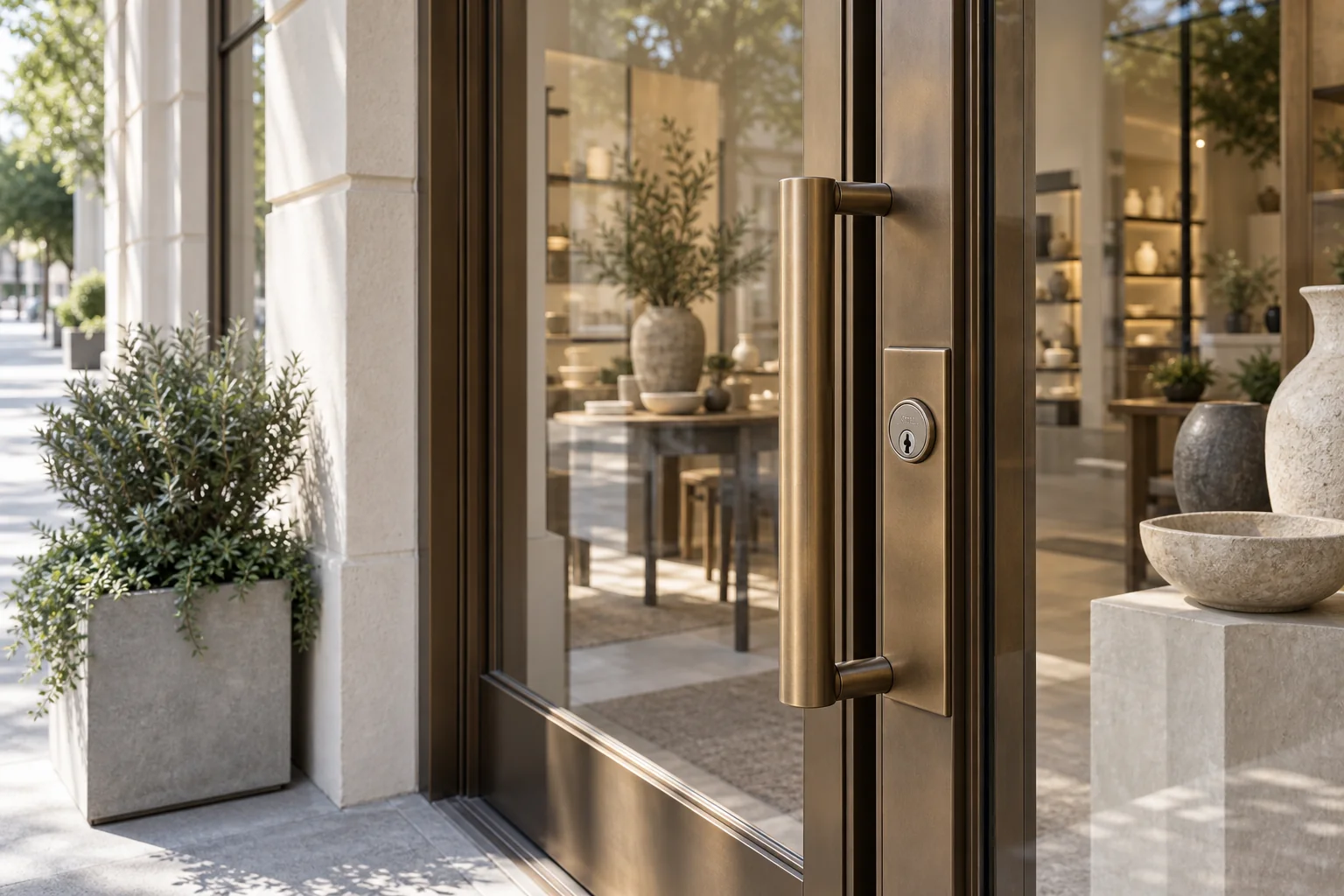
Different spaces call for different hardware. A glass storefront has its own lock types, and an interior office door has another. A technician can explain the options for street facing doors, while the commercial locksmith page describes the broader range of business lock work available.
Who holds the keys? Basic key control
Every business eventually faces the same question: who has a key? Over time, keys go to employees, cleaners, contractors, landlords and relatives. Some are returned, some are copied and some are simply forgotten in a drawer. If you cannot list every holder, you do not control access to your own space, however good the locks are.
Start with a simple record. Write down each key, who holds it, when it was issued and whether it can be copied. Choose a system that matches your size. A very small shop may only need a short list, while a larger operation might benefit from a master key system that lets different people open different doors with different keys. When someone leaves, collect their keys and consider whether rekeying is needed.
For a deeper walk through the topic, read the guide on building a business key control policy. If you are weighing a structured system, the page on master key systems explains how one key can open many doors while others open only their own, and what planning that takes.
Whatever system you choose, write down the rules in a sentence or two. Keys are signed for. Copies are made only through the owner. Lost keys are reported as soon as they are noticed. A policy does not need to be long to be useful, and staff tend to follow a rule they can repeat from memory. Revisit the list when you hire, when someone leaves and at the start of each year, and update it whenever the business changes.
Locked out of an office or shop
A business lockout has a different rhythm from a home lockout. Staff are waiting, customers may be arriving, and the person on the phone may not be the owner. Before calling, confirm who has the authority to approve entry. A locksmith will want to speak with someone who can show they are the owner, the manager or the tenant, and an employee alone may not be enough.
Gather what proves your connection to the space: a lease, a business registration, a utility bill, or a note from the property owner. Photo identification of the person on site is standard. If the building belongs to a landlord, call them as well, since some landlords hold spare keys or have rules about locks. Tell the technician what you learn.
The comparison between a lockout and a lost set of keys matters too. If keys are simply locked inside, opening the door may be enough. If keys are lost or taken, rekeying should be on the table. The problem pages on being locked out of an office and losing all the keys to a business describe each case in detail.
Warehouses, bays and larger spaces
Larger commercial spaces bring their own concerns. Doors may be heavy, hardware may be industrial, and a single failure can affect deliveries or staff. Padlocks on gates and roll up doors are common, and they take a beating from weather and use. Humid air and salt carried inland speed corrosion on exposed metal, so inspecting outdoor hardware regularly is wise.
Think about the whole path in and out. Which doors are used daily, which are kept for emergencies, and which are forgotten? An overlooked side door with an old lock is a common weak point. Panic hardware must be able to release readily from the inside for safety, and requirements vary by building and use, so ask your building manager or the authority that applies to your space about what is needed.
If your work involves goods or equipment, consider how keys are controlled for each area. The page on locksmith services for warehouses and logistics describes common needs, and it is worth asking your building manager before you change any exit hardware.
Vehicles, fleets and the keys in them
Many Tamiami drivers depend on vehicles for work, whether a single van or several. Lost or damaged keys then become an operations problem, not just a personal one. A transponder key needs to be cut and programmed to the vehicle, and a smart fob needs to be paired. The details vary by make and model, so always provide those up front when you call.
If you manage more than one vehicle, keep a record of how many keys exist for each and where they are stored. Keep at least one spare per vehicle in a secure place, and avoid leaving spares inside a vehicle. When a driver leaves, count the keys in the same way you would count building keys, and decide whether any need to be replaced.
For a single vehicle with no remaining key, prepare registration and identification. The page on car key replacement explains what the service involves. If you have lost every key to a car, the guide on losing both car keys in Miami gives a calm order of steps and a list of what to gather.
Access control and keypads for daily use
Some businesses move away from mechanical keys altogether and use keypads, cards or fobs. These systems can give each person their own credential, record who entered and be changed the moment someone leaves. The tradeoff is dependence on power and software, so plan for outages and for a mechanical override where one is appropriate.
Choosing among keypads, cards and fobs depends on how many people need access, how often they change and how much record keeping you want. A small team may be fine with a keypad lock and a code that gets changed when staff do. A larger or more regulated operation may prefer individual credentials. There is no single right answer, only a sensible fit.
The page on access control and keypad locks describes what is available, and a technician can set cards, fobs and keypads side by side for your door. Ask a technician about batteries, backup entry and what happens in a power failure before you decide.
Homes, rekeying and smart locks
Homeowners and renters in Tamiami face the same basic situations as everyone in Miami Dade. A lockout needs calm handling and proof of residence. A lost key calls for a decision about rekeying. A move into a new place suggests rekeying every lock so that previous owners and tenants no longer have working keys. These steps are simple, and they cost far less than the worry of not knowing.
Smart locks are common in homes now, and the climate matters. Humidity, heat and heavy rain test electronics over time. Replace batteries on a schedule, keep the mechanical backup somewhere you can find it, and note the brand and model. If the lock misbehaves, the technician will want to know what it does, such as beeping, flashing or staying silent.
If you rent or live in a shared property, ask your landlord or association before changing locks, since rules vary. The lock rekeying page explains how the work is done and checked with you.
Hurricane season and humid weather
Hurricane season is a fact of life across the county. Before a storm, think about how you will secure doors and what you might need if you evacuate. After a storm, check every lock. Water can swell wood, and shifting frames may stop a deadbolt from reaching its strike. A door that no longer closes cleanly should be dealt with before it becomes a security gap.
Humidity does its work all year. Metal parts oxidize, lubricants thin or gum, and keys pick up grit. Wooden doors move with the seasons, and metal doors can rust at the edges. The sensible response is regular attention. Test your locks each season, and ask a professional what suits your hardware if something feels off.
For a business, add a storm plan for keys: where they are stored, who can reach them and how access works if the building is closed for days. Ask yourself whether the people who need to enter first after a storm can do so, and whether anyone has a key they should not. The hurricane season lock and door checks guide offers a simple order to work through, and it applies equally to homes and shops.
Do not forget the small items that travel with a storm: spare keys, fobs and the paperwork that proves ownership of your vehicle and property. Keep them together in a sealed bag that you can grab. If you evacuate by car, make sure the key you carry is the working one and that a second sits with someone you trust. After you return, test every lock before assuming the building is as secure as you left it.
Neighboring areas and what to do next
If you spend time around Tamiami, you may find the pages for Sweetwater and West Kendall useful too. The advice is the same in each: describe your lock problem clearly, expect to show ownership, and ask for the price before anyone drives to you. The company serves every ZIP code in Miami Dade, and the process is the same whether the job is a house, a shop or a vehicle parked at the curb.
A practical next step is to write down what you have: the number of exterior doors, the type of lock on each, the number of keys, and who holds them. For a business, add the vehicles and their keys. That one page of notes is worth more than it looks, because it turns a hurried call into an organized one.
When the visit happens, stay with the technician for the final check. Try each key, turn each lock and ask any question you have. A job done properly leaves you with locks that work smoothly and a list of what was changed. If something does not feel right, say so before the technician leaves, so it can be corrected on the spot. Keep any notes the technician gives you about the hardware, since they will help the next time you call.
Common questions
Who can approve a lockout at a business?
Usually the owner, a manager or the tenant of record. Expect the technician to ask for photo identification and something that ties you to the space, such as a lease or a note from the landlord. An employee alone may not be enough, and that check protects the business.
How do I keep track of who has keys?
Keep a written record of every key, who holds it and when it was issued. Collect keys when people leave. If you cannot list every holder, consider rekeying. A simple list kept up to date is far better than a guess from memory.
Is a keypad better than a metal key for a small shop?
It depends. A keypad lets you change codes when staff change, which avoids copied keys, but it needs batteries and a plan for failures. Many shops keep a mechanical backup. A technician can explain which fits your door and your habits.
What information do I need for a car key replacement?
Provide the make, model and year, plus registration and photo identification. Mention whether you have any working key left. A transponder key or smart fob may need programming as well as cutting, so the details help the technician come prepared.
Should I worry about exit hardware rules?
Requirements vary by building and use, so ask your building manager, landlord or the authority that applies to your space. A locksmith can describe the hardware and what it does, but you should confirm local requirements before changing exit doors or panic devices.
Is this advice specific to Tamiami?
It is general guidance for Tamiami and the rest of Miami Dade. It does not describe local streets or businesses and does not claim past jobs there. The service is mobile and covers every ZIP code in the county, so the same steps apply anywhere.