 Home Advisor Locksmith
Practical Lock Help for Surfside Residents and Hosts
This page is general guidance for people in Surfside who deal with older doors, short stays, shops, car keys and smart locks, in a coastal climate where salt, humidity and storms wear on every piece of hardware.
A short script for a stressful moment
Being locked out rarely happens at a convenient time. You are tired, carrying bags, or standing in a hallway in the heat, and it is hard to think clearly. A short mental script helps. First, make sure everyone is safe and nothing dangerous is happening inside. Second, check whether another entry is already unlocked or whether a trusted person has a key. Third, call.
When you call, say where you are, what is locked and what happened. Keys inside, key lost, key broken, lock jammed and lock not responding are all different problems. Mention if a child, a pet, medication or something on the stove is inside. Say whether the lock is a plain key lock, a keypad or a smart lock. A few clear sentences let the dispatcher plan.
Home Advisor Locksmith is a mobile service. A real person answers, the price is explained before work starts, the technician comes to you and the finished work is checked with you before the visit closes. This page is general guidance for Surfside. It makes no claim about particular streets, buildings or businesses.
Keep your ID handy, and something that shows the place or vehicle is yours, like a lease, a utility bill or a registration. A responsible locksmith will ask, because opening a door for the wrong person causes real harm. If a technician never asks who you are, treat that as a warning.
If you can, tell the dispatcher what outcome you want. Some people only need the door opened, while others want the lock changed because a key has been lost or stolen. Knowing the goal lets the technician bring the right parts and explain the options on site, so you are not making a major decision in the doorway with no information in your hands.
Mixed buildings, mixed hardware
A coastal community with a long history usually has a mix of building ages. Some structures have original doors and hardware. Others have been renovated, with new doors fitted into old frames or modern locks screwed onto older doors. The result is a patchwork, and one building may contain several different lock types.
That mix matters when you call. A technician needs to know what they are dealing with before arriving. A modern cylindrical lock, an older mortise lock set into the door edge and a surface mounted rim latch each need different parts and different skills. Photos of the door edge and the inside of the lock, if you can take them, make the conversation easier.
Do not assume that old means weak, or that new means strong. Some older hardware is sturdy and well made, while some newer locks are basic. What matters is the condition, the fit and how the whole door is built. A technician can look at the whole picture and tell you honestly what is worth keeping.
The comparison of mortise and cylindrical locks explains two common designs, which helps you describe what you have and understand your options.
One more thing to watch in mixed buildings is how doors were cut. An old door that has been drilled for several different locks over the years may have thin spots, and a new lock set into the wrong place can weaken it further. A technician can look at the door's condition and advise whether it can safely take new hardware or needs repair first. That honest assessment is worth more than a hasty swap.
Older lever sets, knobs and what to do with them
Many older doors carry knobs or lever handles with a built in lock. These are convenient but often provide limited security, since the lock is part of the handle and relies on a small latch. A separate deadbolt adds a second, stronger lock and is one of the most common upgrades.
If you are choosing between handle styles, think about daily use as well as looks. Levers are easier to operate for people with limited grip, children and anyone carrying groceries. Knobs are traditional and often match older doors. The comparison of lever handles and knobs sets out the differences.
When replacing hardware, check that the new parts fit the existing holes and that the door is thick enough for the lock. A technician can often adapt a modern lock to an older door, or recommend a lock designed for that format. Appearance matters to many owners of older buildings, and finish choices are wide.
If the building has historic or appearance rules, ask the association or manager before changing visible hardware. Requirements vary, and it is easier to get approval first than to undo work afterward.
Consider the rest of the door while you are at it. Hinges that sag, weatherstripping that has worn through and a threshold that no longer meets the door all affect how a lock behaves. A lock cannot cure a door that has dropped out of line, and replacing a lock to fix a door problem is a common waste. Describe the symptom to the technician and let them find the actual cause.
Short stays, hosts and guests
A beach community naturally attracts short stays. Hosts need to get guests in and out smoothly, and guests need a simple way to enter. Handing over a physical key means keeping track of copies, and every missing key becomes a small crisis. Many hosts move to codes for that reason.
A keypad or smart lock lets a host create a code for a stay and delete it afterward. No key travels, and nobody has to meet a guest at the door. The lock needs care, though. Batteries need replacing on a schedule, the door must be aligned, and there should be a backup way in. Our guide on vacation rental lock management goes through these points in detail.
Check the rules first. Some buildings and associations limit short stays, restrict electronic locks or require that management hold a key. Whether and how you may rent is a question for your association, your city and your lease, and a locksmith cannot answer it for you. Ask before you invest in hardware.
Between guests, do a short check of every lock. Does the door close and latch without effort? Does the code work? Is the backup key where it should be? A two minute check prevents a call at midnight.
Leave clear instructions for guests. A card inside the door that explains how the lock works, what to do if the battery beeps and who to call if they are stuck can head off most problems. Keep the language plain and avoid long technical explanations. A guest who understands the lock is far less likely to panic, force the handle or lock themselves out of the unit.
After a beach day: lost keys and wet fobs
Beach days are hard on keys. Pockets get wet, bags are left on sand and fobs are dropped. A key lost on the beach is usually gone for good, and a fob that took a swim may stop working. If you have a push button car, a wet fob can leave you unable to start the vehicle.
If your fob stops working, try a new battery first. If it still fails, dry it in open air, not with heat, and do not keep pressing the buttons. A technician can test the fob and tell you whether it can be repaired, reprogrammed or replaced. The page on a key fob that stopped working explains the common causes.
If you lose a car key altogether, you will need a replacement made for your vehicle. A mobile locksmith can often do that at your location, although the details depend on the make, model and key type. Expect to show ID and proof of ownership. The guide on what to do after losing a car key lists the order of steps.
Prevention is simple. Use a waterproof pouch for keys on beach days, keep a spare at home and avoid carrying both the main key and the spare together. If a child or a pet is ever locked in a hot car, call emergency services first.
Wallets and phones disappear on beach days too, and with them go keys, cards and access fobs. If that happens, think about every door those keys open and who needs to be told. The guide on what to do after losing a wallet or phone with keys walks through the order, including when a rekey is worth doing.
Small shops and cafes
Small shops, cafes and offices need locks that keep up with constant use. A front door that opens hundreds of times a day wears out its hardware, and a back door used for deliveries needs a lock that staff can handle without fuss. Residential hardware often fails early in these settings.
Good key control matters. Keep a list of who holds which key, collect keys when someone leaves and rekey if you are unsure where a key went. Consider restricted key blanks, which make copying harder without your approval. The guide on business key control policy offers a framework to adapt.
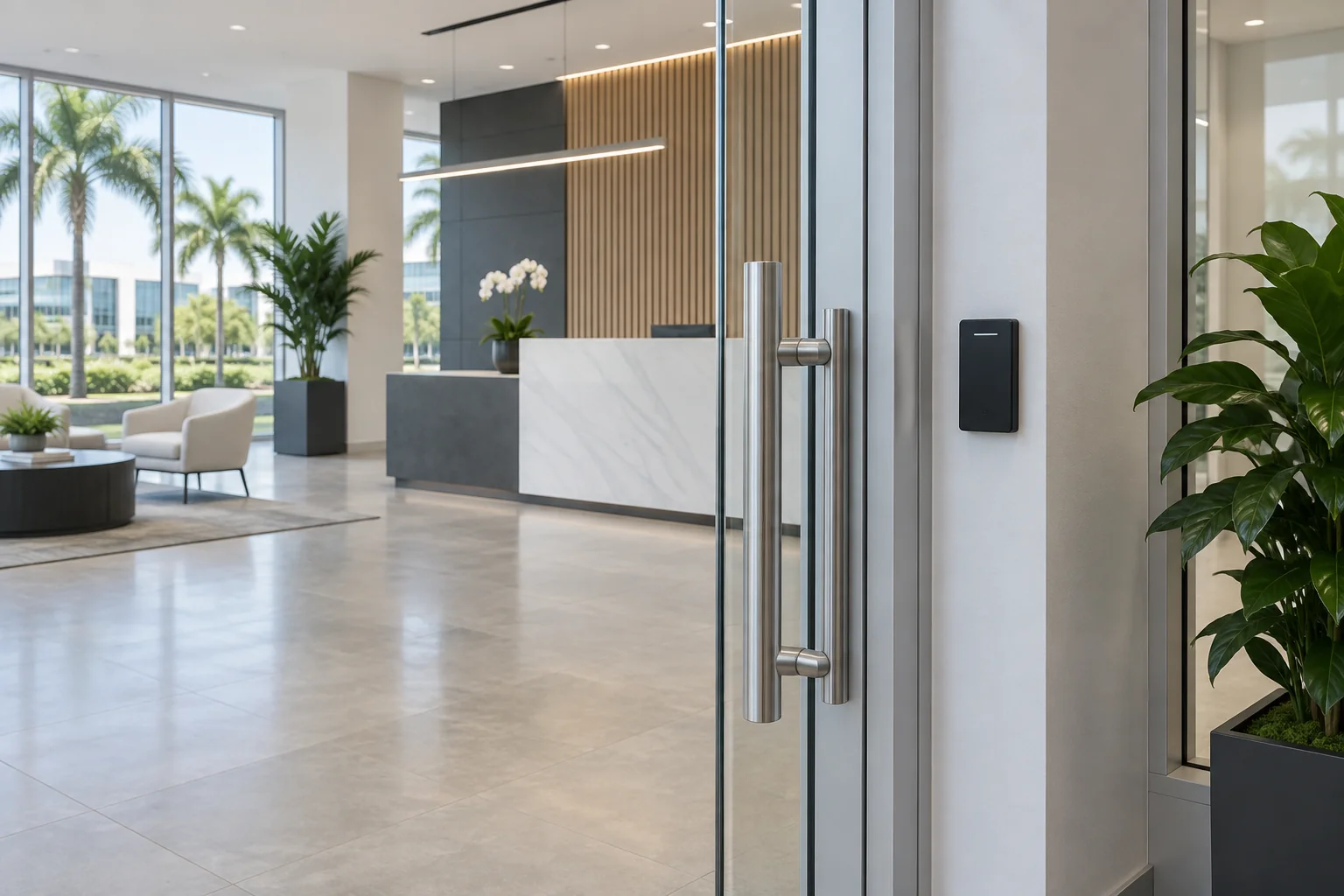
Glass doors are common in these spaces. They look inviting, but the lock, the frame and the glass must work together. Ask a technician to look at the whole door, including the latch, the strike and the frame. Our page on storefront and glass door locks explains what is usually involved.
If you lease your space, check the lease before changing locks, and tell your landlord if required. Fire and life safety rules for exit doors vary, so ask your city, the fire authority or your building manager what applies rather than guessing.
Think about opening and closing routines. Who unlocks in the morning, who locks at night and who checks the back door? A written checklist by the door prevents most lapses, and the person who normally closes may not always be there. Make sure at least two people know how to operate every lock, including any alarm or code, and that spare keys are accounted for.
Salt on the breeze, damp in the walls
Salt air is part of daily life near the ocean, and it works on metal constantly. It settles on handles, hinges and keyholes, and it finds its way inside. Combined with damp air, it speeds up corrosion in ways that surprise people who have lived inland.
Watch for the early signs: keys that drag, thumb turns that stick, handles with pitted finishes and green or white crust near the keyway. When you see them, avoid forcing the lock. A cleaned and properly lubricated lock may work for a long time, but a corroded one that is forced can break.
The guide on salt air and lock corrosion goes into the details. When replacing hardware, ask about materials and finishes suited to the coast. Solid brass and stainless steel tend to hold up well, and a technician can explain what they stock and how it behaves.
Do not forget the less obvious metal in a door. Hinges, screws, strike plates and thresholds corrode too, and a rusted hinge screw can let a door sag until the lock no longer lines up. A yearly walk around every exterior door with a screwdriver in hand, tightening what is loose and noting what is rusted, catches many problems while they are small and easy to correct.
Storm season at the shore
Hurricane season requires preparation, and doors are central to it. Shutters and panels go up, residents leave, and buildings are closed for days. A lock that sticks, a deadbolt that does not fully extend or a door that has swelled can turn a stressful week into a worse one.
Test everything while the weather is calm. Close each door, turn each deadbolt and check each key. Tighten loose hinge screws, look at strike plates and note anything that rubs or drags. Plan for who will check your property if you leave, and make sure they can get in without a key hidden in an obvious place.
After a storm, check again. Water can get behind frames, wind can loosen hardware and debris can jam latches. The guide on hurricane season lock and door checks offers a sensible order. If a door was forced during or after a storm, photograph it before touching anything.
Keep a small kit ready before the season starts. It might hold spare keys for the house and car, a few spare batteries for keypad locks and fobs, copies of important papers and the contact details of a trusted helper. Having these in one place turns a chaotic evacuation into an orderly one, and it means you will not be hunting through drawers with the clock running.
Street parking, shared lots and car keys
Cars in busy coastal neighborhoods spend time on streets and in shared lots. Keys get lost, locked inside and left in the wrong place. A calm routine helps: touch your pocket for the key before closing the door, and avoid putting the key on the seat or roof.
Modern keys contain chips that talk to the car. A copy must be programmed, not simply cut. Push button fobs add proximity sensors, and some cars have keys that fold into the fob. Know what you have before you call, so you can describe the vehicle and the key. The page on car key replacement explains how the service works.
If you are locked out of your car in a public place, give the dispatcher your location, the vehicle make, model and year, and a description of what happened. Be ready with ID and proof of ownership. If you feel unsafe, wait in a public, well lit spot and give your location from there.
Avoid the temptation to force a window or door on your own car. Modern doors contain wiring, airbag components and sensitive seals, and damage from forcing them can cost more than the lockout itself. A technician uses methods that protect the vehicle. The page on lockout help for vehicles explains what to expect, and the price is explained before work starts.
What to expect when you book
The process is simple. You call, and a real person asks about your situation and location. The price is explained before work starts. The technician comes to you, does the work and checks it with you before the visit closes. You should always understand what is happening.
Prepare ID and proof of ownership or permission. In a managed building, tell staff a technician is coming and arrange approval if needed. A little preparation prevents delays at the door.
Afterward, test every key and lock that was touched. Keep new keys together, store spares carefully and write down what was changed and when. A short record is useful when you sell, rent out or call for help again.
Common questions
What should I say first when I call?
Say where you are, what is locked and what happened. Mention anyone or anything at risk inside, such as a child, a pet or medication. Say whether the lock is a key lock, keypad or smart lock. Have ID ready along with proof the place or vehicle is yours.
Can older door hardware be kept?
Often yes. Many older locks can be serviced or rekeyed if the parts are sound. If the lock is badly worn or cannot be matched, replacement may be wiser. A technician can look at it and explain the choices before work starts.
Is a smart lock a good idea for a short stay rental?
It can be, because codes can be created and deleted for each stay. It needs batteries, a well aligned door and a backup way in. Check association and city rules first, since some buildings limit electronic locks or rentals.
What if my fob falls in the water?
Dry it in open air, not with heat, and try a fresh battery. If it still fails, stop pressing buttons and call. A technician can test the fob and tell you whether repair, reprogramming or replacement is the right step.
How can a shop control who has keys?
Keep a written list of key holders, collect keys when staff leave and rekey if a key goes missing. Restricted key blanks make copies harder. A master key system can give managers wider access than staff without extra keys.
Does salt air affect locks that are indoors?
Less than outdoor hardware, but not zero. Salt and humidity enter buildings, and entry doors, balcony doors and keyholes feel it most. Gritty keys and stiff turning are early signs. Have worn locks checked before the key breaks.